 Engin Kurutepe
Eine Sonnenfinsternis passiert, wenn der Mond zwischen Erde und Sonne wandert und seinen Schatten auf die Erde wirft. Von diesem Schatten aus scheint die Sonne teilweise oder vollständig bedeckt zu sein.
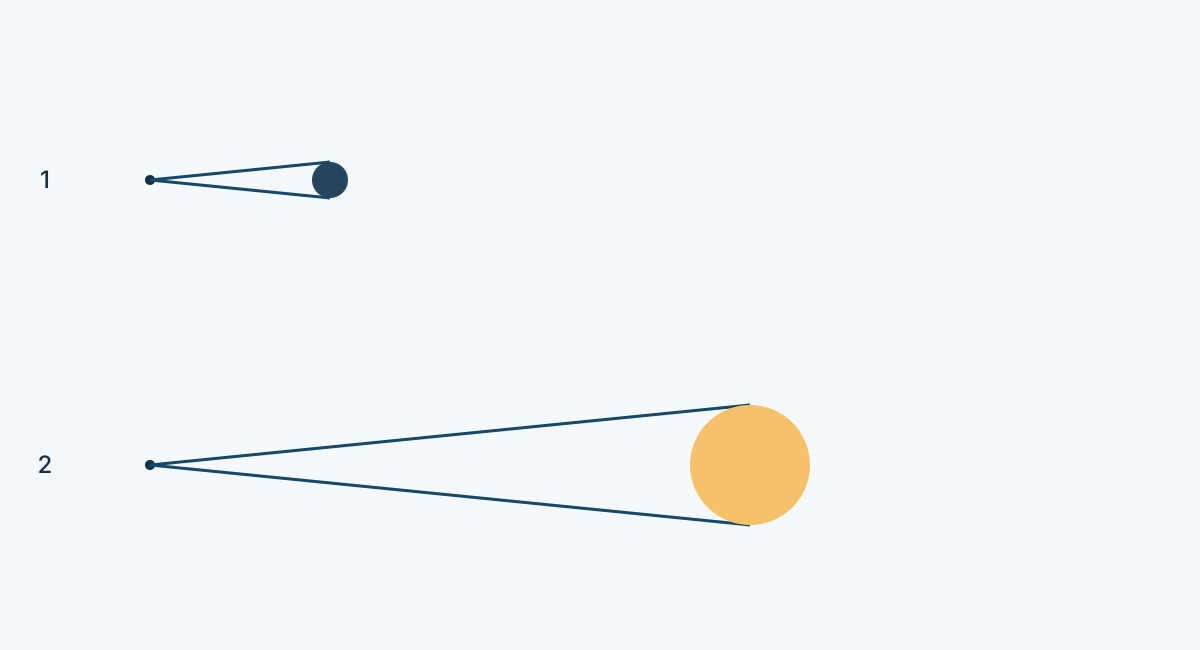
Die Idee ist einfach, aber das Ergebnis kann sich unmöglich anfühlen. Die Sonne ist etwa 400-mal breiter als der Mond, aber auch etwa 400-mal weiter von der Erde entfernt. Dieses Zusammentreffen von Größe und Abstand lässt die beiden Scheiben an unserem Himmel nahezu gleich groß erscheinen. Wenn die Ausrichtung genau richtig ist, kann der kleine nahe Mond die riesige entfernte Sonne verbergen.
Der Schatten hat verschiedene Zonen
Der Mond wirft keinen einzigen Schatten. Es entstehen einige Regionen, und jede erzeugt ein anderes Sonnenfinsternis-Erlebnis.
- Der Umbra ist der dunkelste zentrale Schatten. Wenn Sie darin stehen, können Sie eine totale Sonnenfinsternis beobachten.
- Der Halbschatten ist der hellere Außenschatten. Wenn man darin steht, sieht man eine partielle Sonnenfinsternis.
- Die Antumbra beginnt jenseits des Kernschattens, wenn der Mond zu klein erscheint, um die Sonne zu bedecken. Wenn Sie darin stehen, sehen Sie eine ringförmige Sonnenfinsternis, manchmal auch Feuerring genannt.
SolarWatch visualisiert diese Schattenregionen auf einer interaktiven Karte und einem Globus, sodass die Geometrie nicht nur ein abstraktes Diagramm ist. Sie können durch die Zeit wandern und beobachten, wie sich der Schatten über die Erde bewegt.
Totale, partielle und ringförmige Finsternisse
Während einer totalen Sonnenfinsternis verdeckt der Mond die Sonne für Beobachter auf dem Weg der Totalität vollständig. Der Himmel verdunkelt sich, die Temperatur kann sinken, Planeten und helle Sterne können erscheinen und die schwache Korona der Sonne wird um die schwarze Scheibe des Mondes sichtbar.
Bei einer partiellen Sonnenfinsternis ist nur ein Teil der Sonne bedeckt. Partielle Finsternisse sind viel weiter sichtbar, da der Halbschatten einen größeren Bereich abdeckt als der Kernschatten. Eine Stadt außerhalb des Pfades der Totalität kann dennoch eine dramatische partielle Sonnenfinsternis erleben.
Während einer ringförmigen Sonnenfinsternis ist der Mond auf seiner elliptischen Umlaufbahn zu weit von der Erde entfernt, um die Sonne vollständig zu bedecken. Das verbleibende Sonnenlicht bildet einen hellen Ring um den Mond. Ringförmige Finsternisse sind wunderschön, aber ohne zertifizierte Sonnenfilter sind sie nie sicher zu beobachten, da die helle Sonnenoberfläche sichtbar bleibt.
Warum Totalität so besonders ist
Vollständige Totalität verdeckt die helle Photosphäre und macht die Korona sichtbar. Baily-Perlen und Diamantring treten an ihren Grenzen auf, wenn direktes Sonnenlicht noch sichtbar ist oder gerade zurückkehrt. Dafür ist Augenschutz nötig.
Der Weg der Totalität ist schmal, weil der Kernschatten des Mondes schmal ist, wenn er die Erde erreicht. Zwei Menschen im selben Land können sehr unterschiedliche Erfahrungen machen: Einer sieht möglicherweise Dunkelheit und die Korona, während ein anderer, der nur eine kurze Autofahrt entfernt ist, eine tiefe partielle Sonnenfinsternis sieht.
Eine Sonnenfinsternis ist lokal
Es gibt keinen einzigen Sonnenfinsternis-Zeitpunkt, der für alle funktioniert. Der Zeitpunkt des ersten Kontakts, der maximalen Sonnenfinsternis, der Totalität und des letzten Kontakts hängen alle von Ihrem genauen Standort ab. Deshalb konzentrieren sich die Eclipse-Planungstools auf lokale Umstände: was an einem ausgewählten Ort passiert.
Mit SolarWatch können Sie beispielsweise auf einen Punkt auf der Finsterniskarte tippen und dort Kontaktzeiten, Verdunkelung, Helligkeit, Sonnenhöhe und Gesamtdauer anzeigen, sofern zutreffend. Diese lokalen Details machen aus einem globalen Sonnenfinsternis-Ereignis einen Plan für eine Stadt, einen Hügel, einen Strand oder einen Campingplatz.
Quellen und zugehörige Leitfäden
- NASA GSFC erklärt die grundlegende Geometrie von Sonnenfinsternissen, einschließlich Kernschatten, Halbschatten, Antumbra und zentrale Sonnenfinsternispfade.
- Das NASA Earth Observatory zeigt, wie Kernschatten und Halbschatten aus dem Weltraum erscheinen.
- Als nächstes in dieser Reihe: die vier Arten von Sonnenfinsternissen, der Pfad der Totalität, warum der Mond genauso groß aussieht wie die Sonne und Sicherheit bei Sonnenfinsternissen.
Sehen Sie es in SolarWatch
Öffnen Sie den Sonnenfinsternis-Katalog, um Finsternisse von 2000 bis 2200 zu durchsuchen, ein Ereignis auszuwählen und die Karte zu erkunden. Verwenden Sie die Mondschattensimulation, um zu sehen, warum an einem Ort eine Totalfinsternis auftritt, während an einem anderen nur eine partielle Sonnenfinsternis auftritt.
Keep reading
All guides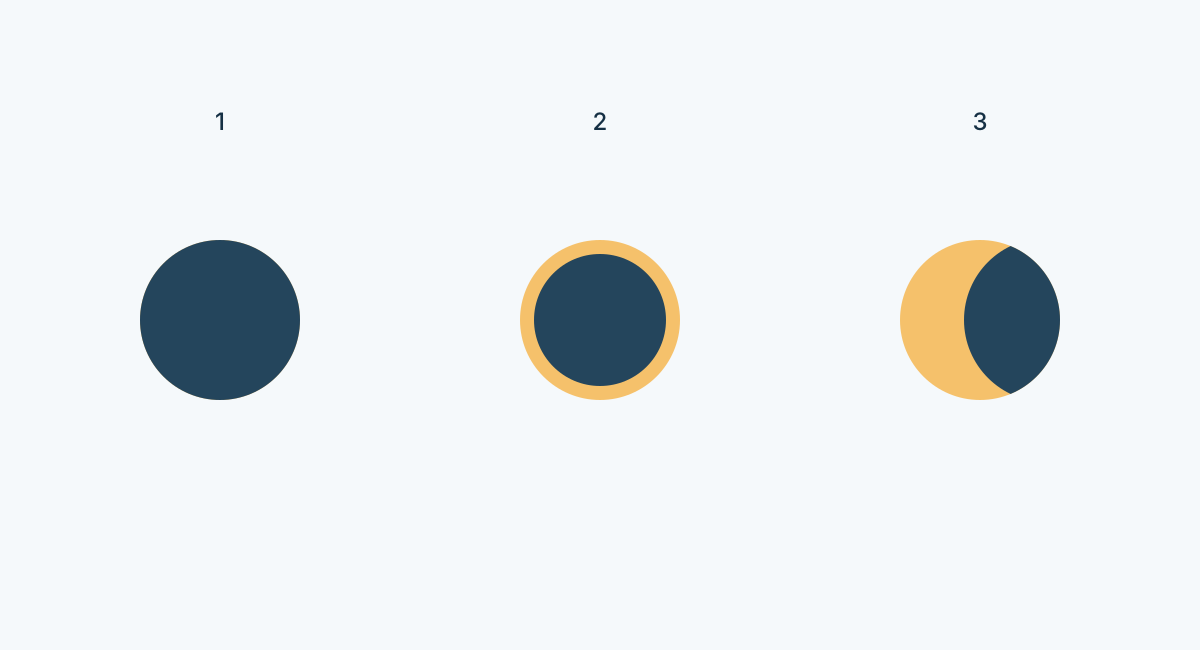
4 min read
Die vier Arten der Sonnenfinsternis
Totale, ringförmige, partielle und hybride Sonnenfinsternisse im Klartext erklärt, mit der Schattengeometrie hinter jedem Typ.
4 min read
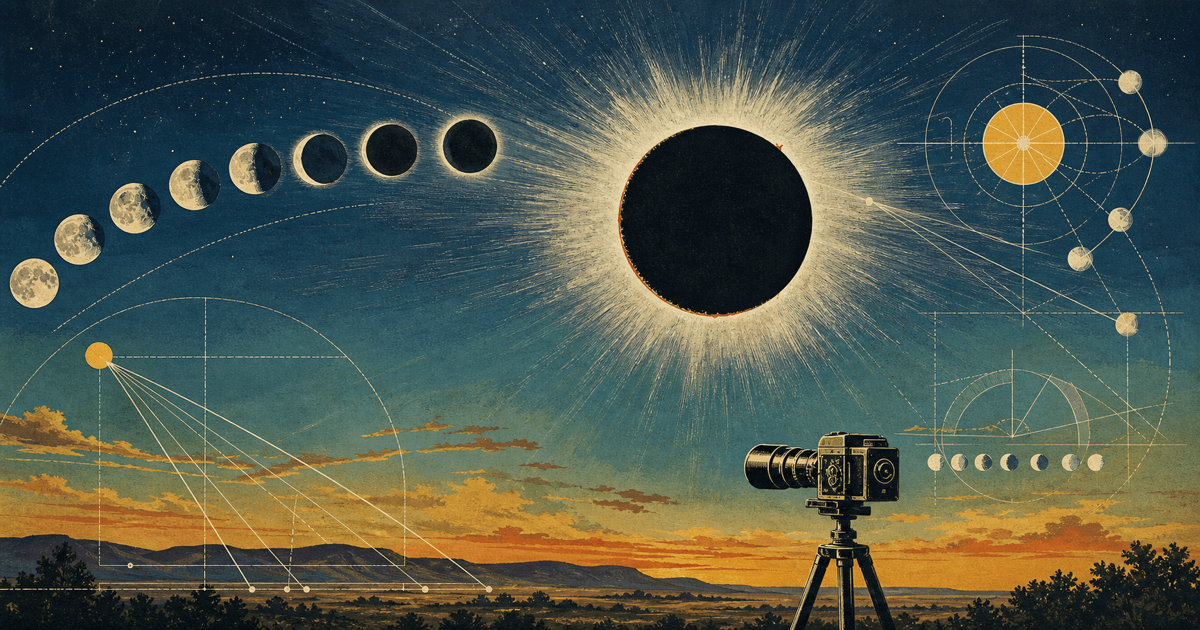
Der Weg der Totalität erklärt
Was der Weg der Totalität ist, warum er ein schmales Band ist, wie schnell er sich bewegt und warum lokale Planung wichtig ist.
3 min read
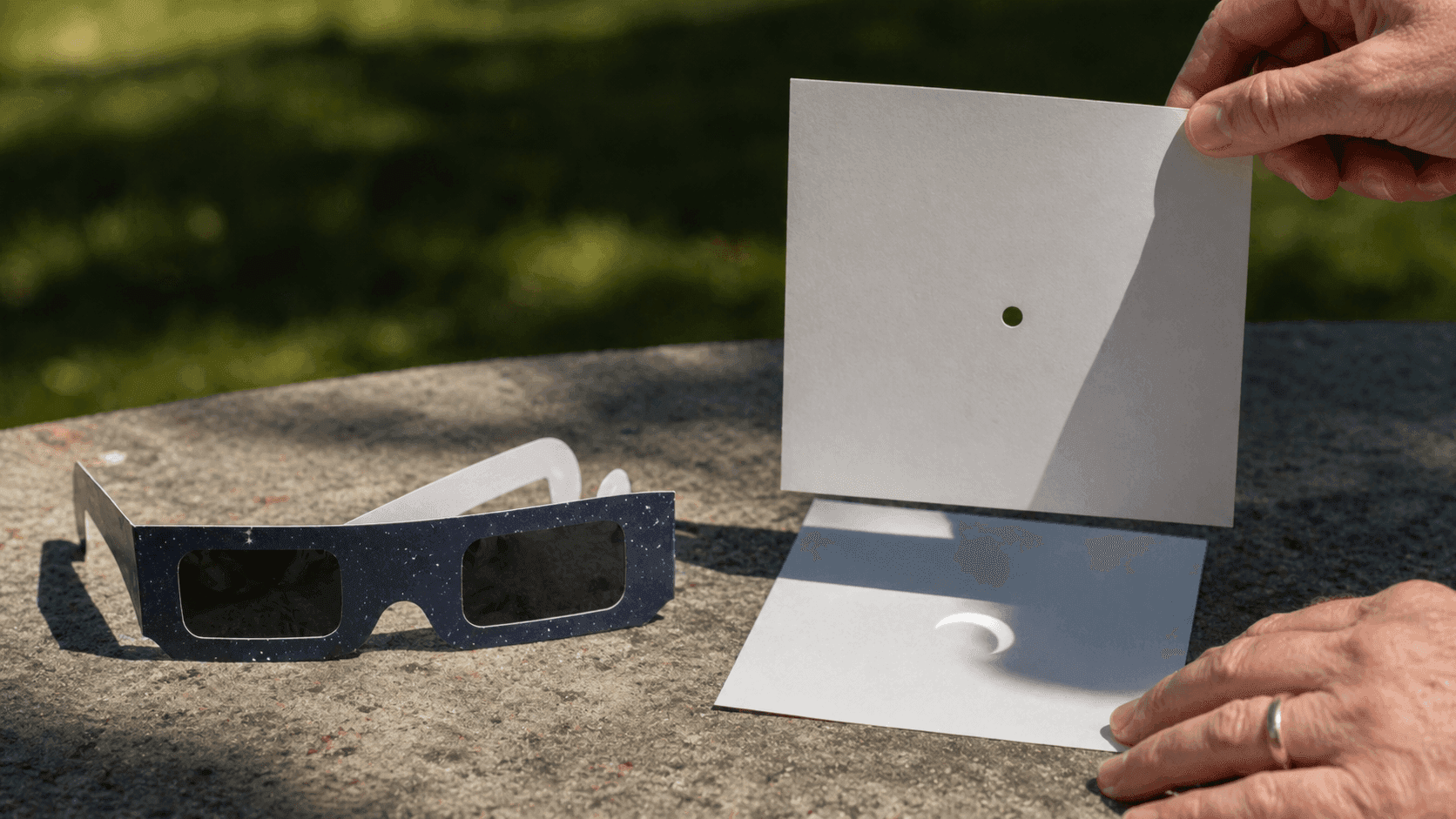
So beobachten Sie eine Sonnenfinsternis sicher
Lernen Sie die wesentlichen Sicherheitsregeln bei Sonnenfinsternissen kennen: Sonnenfinsternisbrillen nach ISO 12312-2, sichere indirekte Sicht, Kamerafilter und wann die Totalität sicher ist.
4 min read
Warum der Mond genauso groß aussieht wie die Sonne
Der Mond ist viel kleiner als die Sonne, aber auch viel näher. Lernen Sie den kosmischen Zufall kennen, der totale Sonnenfinsternisse möglich macht.