Solar eclipses are safe to enjoy when you use the right viewing method. The key rule is simple: never look directly at any visible part of the Sun without proper solar protection.
That rule applies before totality, after totality, during partial eclipses, and during annular eclipses. The only exception is the brief total phase of a total solar eclipse, when the Moon completely covers the Sun's bright face for observers inside the path of totality.
Use certified eclipse glasses
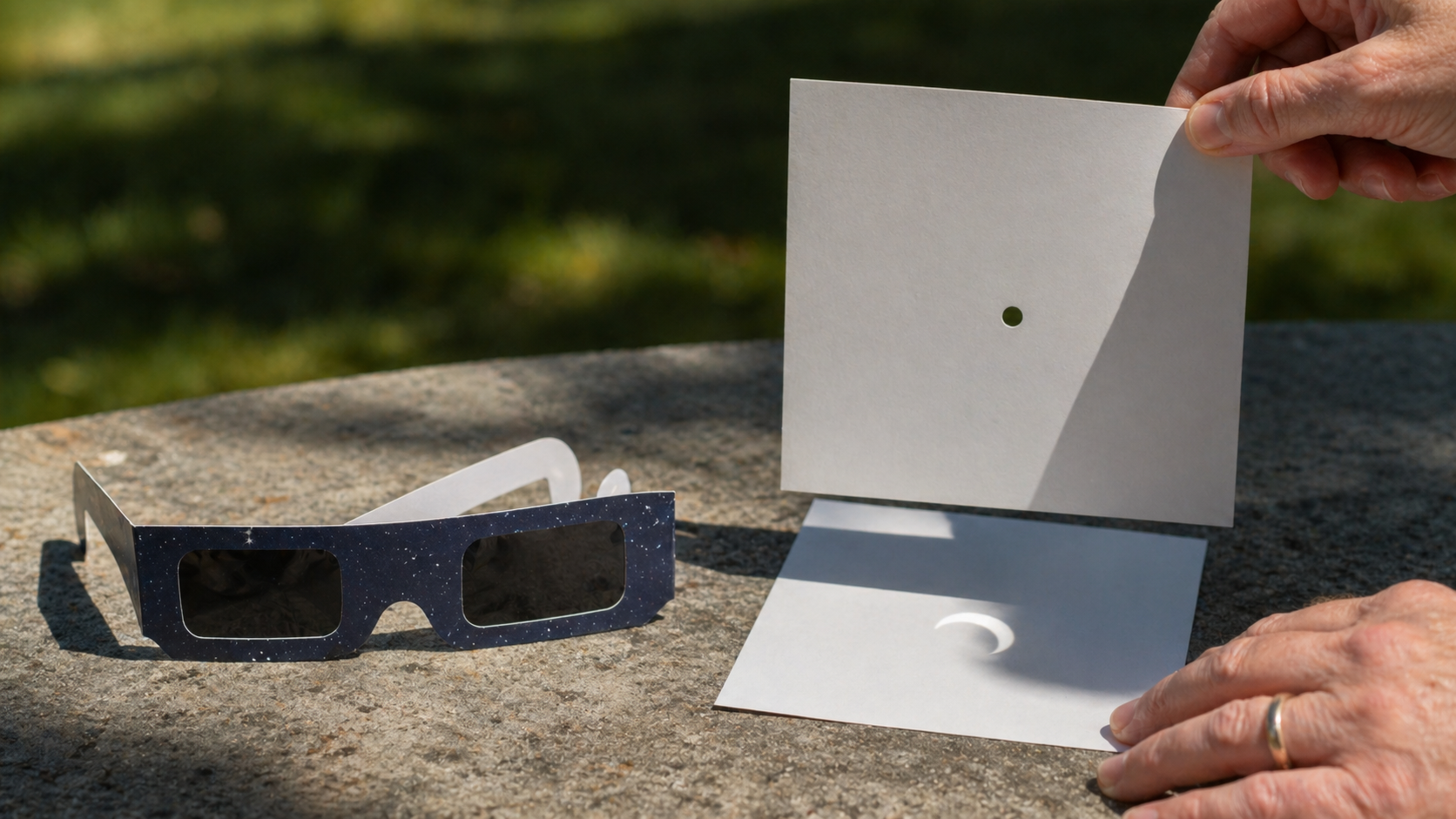
For direct viewing, use eclipse glasses or handheld solar viewers that comply with the ISO 12312-2 international safety standard. They should come from a reputable source and be free of scratches, holes, warping, or damaged film.
Regular sunglasses are not enough, even if they are very dark. They do not block the necessary amount of visible, ultraviolet, and infrared light. Smoked glass, exposed film, CDs, DVDs, and improvised filters are also unsafe.
If you are supervising children, make eclipse safety physical and simple: glasses go on before looking up, stay on while any part of the Sun is visible, and come off only when an adult confirms totality has begun.
Indirect viewing is a great option
You do not need to look at the Sun directly to enjoy an eclipse. A pinhole projector lets sunlight pass through a small opening and fall onto a surface, creating a tiny projected image of the eclipsed Sun.
You can make a simple version with two pieces of card: poke a small hole in one card, let sunlight pass through it, and hold the second card behind it as a screen. During the eclipse, the projected bright circle will show the Moon's bite moving across the Sun.
Tree leaves can do the same thing naturally. The small gaps between leaves act like pinholes, scattering hundreds of crescent Suns onto the ground during the partial phases.
Cameras, binoculars, and telescopes need front filters
Optical devices concentrate sunlight. Looking through an unfiltered camera viewfinder, binoculars, or telescope can cause severe eye injury very quickly, even if you are wearing eclipse glasses.
Any camera lens, binocular, or telescope used for the partial phases needs a solar filter mounted securely on the front, before sunlight enters the optics. Do not use eclipse glasses as a substitute filter behind a magnifying optical device.
During totality, experienced photographers remove solar filters to capture the corona, then replace them before the Sun returns. This timing is unforgiving, which is why accurate contact times matter.
Totality has different rules
Inside the path of totality, the Sun's bright photosphere disappears between second contact and third contact. During that short interval only, it is safe to look at the totally eclipsed Sun with your unaided eyes.
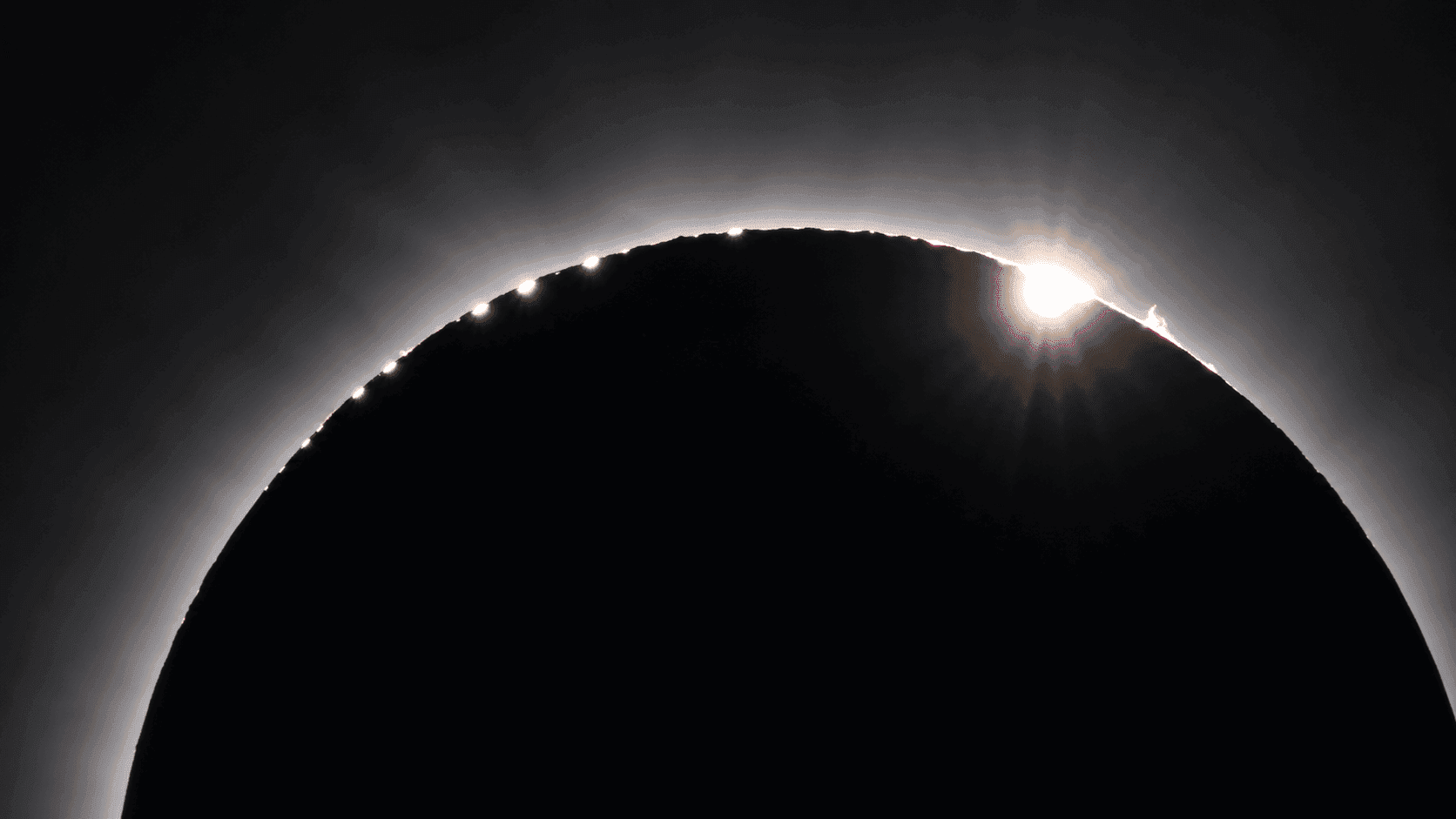
The warning sign that totality is ending is the reappearance of bright light at the edge of the Moon, often as the diamond ring effect. Look away and put eclipse glasses back on before the bright Sun returns.
If you are not inside the path of totality, there is no naked-eye viewing window. Even a 99 percent partial eclipse leaves enough exposed Sun to require protection.
Plan safety around your location
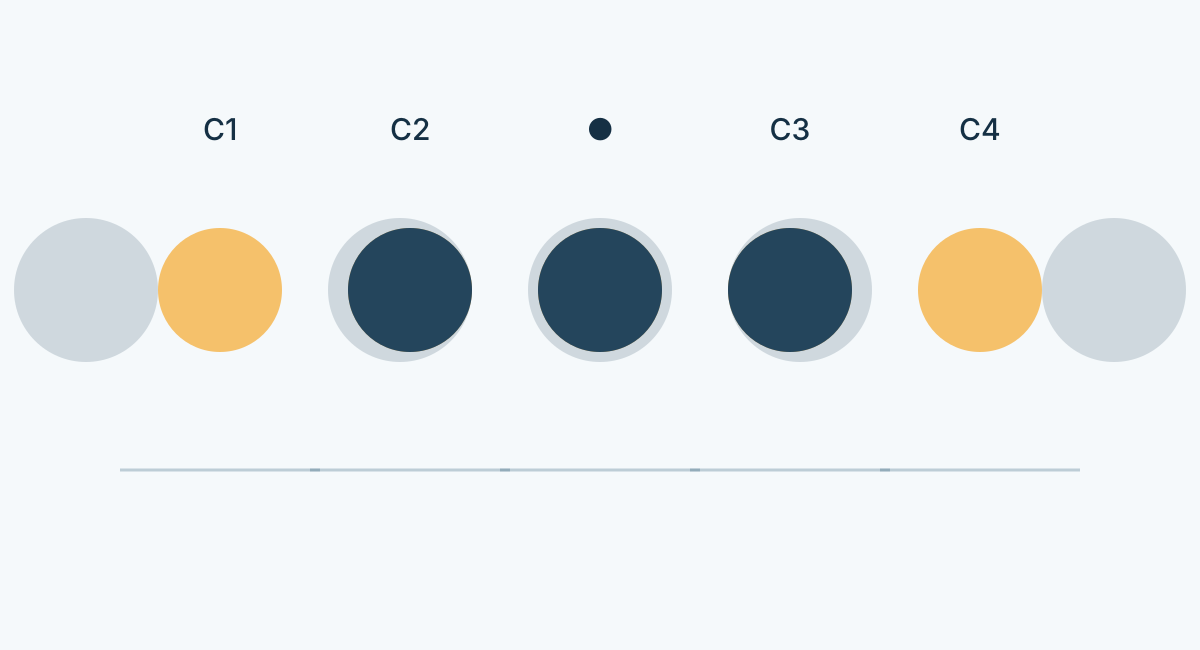
Eclipse safety depends on timing. First contact, second contact, third contact, and fourth contact are not the same everywhere. A printed schedule for one city may be wrong for another viewing spot.
Use location-specific contact times, build in a margin, and brief everyone in your group before the eclipse begins. The most relaxed eclipse watchers are usually the ones who made their safety plan before the sky started changing.
Sources and related guides
- NASA's eclipse safety guidance explains safe direct viewing, pinhole projection, and optical-device warnings.
- The American Astronomical Society maintains guidance on ISO 12312-2 solar viewers and reputable eclipse-glasses suppliers.
- Related SolarWatch guides: C1, C2, C3, C4 contact times and Baily's beads and the diamond ring effect.
See it in SolarWatch
SolarWatch shows local C1, C2, maximum eclipse, C3, and C4 times for the selected place. Use those contact times to plan when filters stay on, when totality begins, and when protection must go back on.