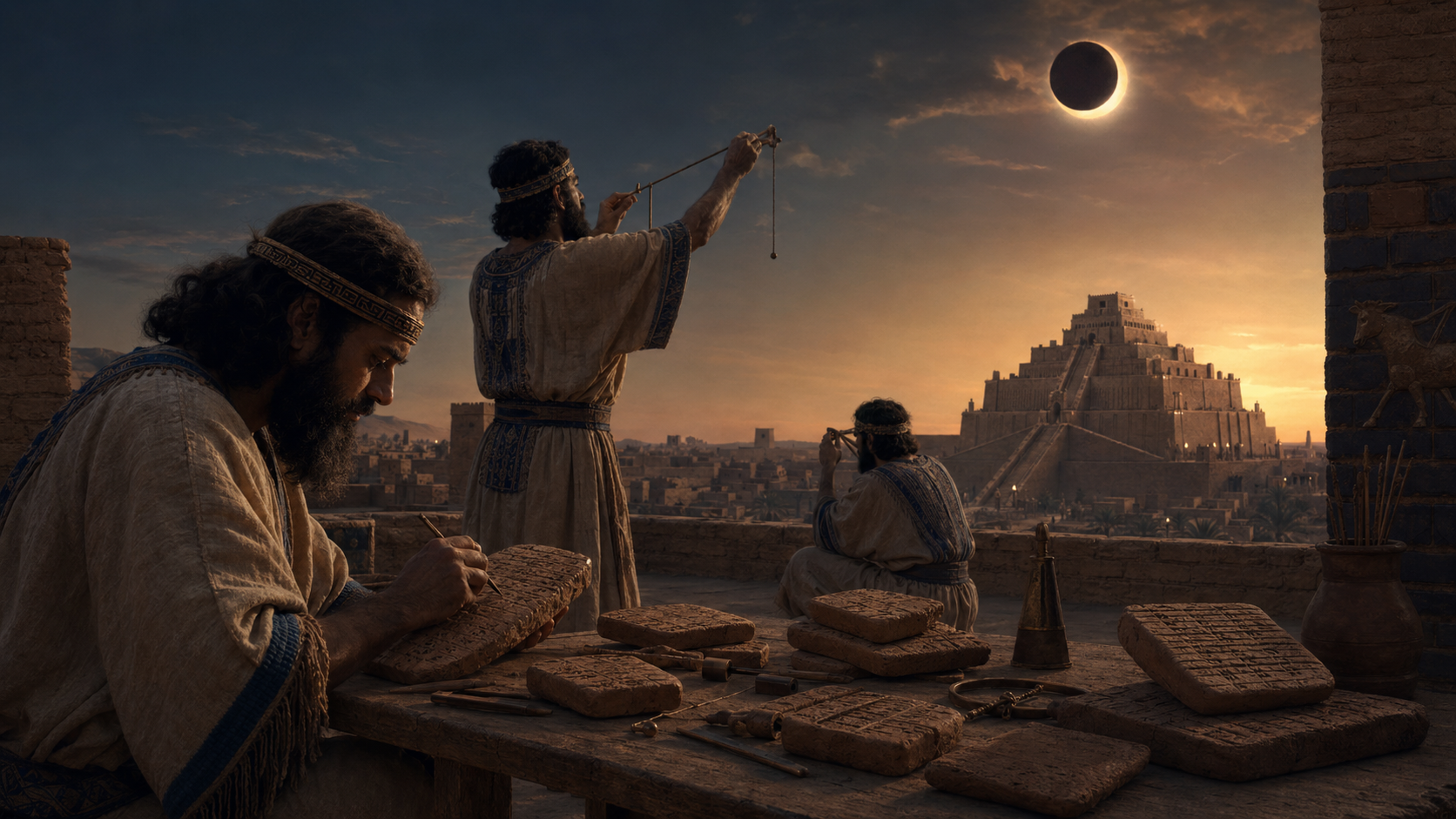
컴퓨터, 망원경, 우주 임무가 등장하기 오래 전에 바빌로니아의 천문 관측자들은 일식이 무작위로 일어나지 않는다는 것을 알게 되었습니다.
그들은 하늘을 계속해서 기록함으로써 그것을 해냈습니다. 밤마다, 달마다, 세대를 거쳐 그들은 달의 움직임, 행성의 위치, 특이한 사건, 일식을 기록했습니다. 시간이 지남에 따라 이러한 기록은 패턴을 드러냈습니다. 일식은 무서울 수도 있지만 리듬에 속한 일이기도 했습니다.
그 성과는 과소평가되기 쉽습니다. 바빌로니아인들은 태양, 달, 노드가 비슷한 배열로 돌아갔다는 것을 알아차리기 위해 중력에 대한 현대적인 설명이 필요하지 않았습니다. 그들은 개별 관찰자보다 오래 지속되는 인내, 기억, 기록이 필요했습니다.
예측은 기록으로 시작되었습니다
고대 메소포타미아 천문학은 행정, 달력, 의식, 징조 해석과 관련이 있었습니다. 일식은 특히 왕들에게 정치적, 종교적 중요성을 지닌 표시로 여겨졌기 때문에 중요했습니다.
그러한 문화적 압력으로 인해 하늘을 주의 깊게 관찰하고, 일어난 일을 보존하고, 경고 패턴을 찾는 실질적인 필요성이 생겼습니다.
점토판은 데이터 저장 시스템이었습니다. 그들은 수년에 걸쳐 관찰을 할 수 있었고, 나중에 천문학자들은 새로운 사건을 오래된 사건과 비교할 수 있었습니다. 단일 일식은 놀랄 수 있습니다. 일식 기록의 긴 시퀀스는 예측 도구가 될 수 있습니다.
사로스 리듬
가장 잘 알려진 일식 리듬은 약 18년 11일 8시간을 주기로 하는 사로스 주기입니다. 그것은 223개의 공의월, 242개의 용의 달, 239개의 변칙적인 달을 연결합니다.
일식에는 여러 개의 달 시계가 정렬되어야 하기 때문에 이러한 숫자가 중요합니다.
- 일식을 위해서는 달이 새로 생겨야 하고, 월식을 위해서는 보름달이 되어야 합니다.
- 달은 기울어진 궤도가 황도를 가로지르는 노드 근처에 있어야 합니다.
- 지구와 달의 거리는 일식의 종류와 깊이에 영향을 미칩니다.
하나의 사로스(Saros) 이후에는 관련된 일식이 일어날 수 있을 만큼 기하학적 구조가 유사합니다. 바빌로니아 천문학자들은 일식의 주기성을 현대 궤도 언어로 기술하지는 않았지만 관찰과 기록 비교를 통해 인식했다.
그들이 예측할 수 있었던 것
고대의 예측은 지도를 열고 도시를 두드리는 것과는 다릅니다.
바빌로니아 천문학자들은 일식 가능성을 식별하는 데 특히 뛰어났습니다. 그들은 특정 달이나 관찰 기간 동안 일식이 일어날 가능성이 있다고 경고할 수 있습니다. 월식은 달이 지평선 위에 있는 넓은 지역에서 볼 수 있기 때문에 더 간단합니다.
일식은 더 어려웠습니다. 일식은 전 세계적으로 존재할 수 있지만 특정 도시를 완전히 놓칠 수 있습니다. 전체성은 훨씬 더 좁습니다. 현대적인 측지학 및 그림자 투영 없이 정확한 국지적 일식 상황을 예측하는 것은 고대 방법이 신뢰할 수 있는 수준을 훨씬 넘어섰습니다.
이는 성취를 더 흥미롭게 만듭니다. 그들은 현대식 일식 매핑을 수행하지 않았습니다. 그들은 인류 최초의 장기 과학 데이터 시스템 중 하나를 구축하고 있었습니다.
징조와 과학은 아직 분리되지 않았습니다
바빌로니아 천문학을 '종교'와 '과학'으로 분리하고 싶은 유혹이 있지만, 그것은 너무 현대적인 구분입니다. 바빌로니아 학자들에게 하늘은 의미 있는 동시에 패턴이 될 수 있었습니다.
일식은 징조로 읽힐 수도 있지만 이를 예측하려면 엄격한 관찰이 필요했습니다. 표지판을 해석하려는 욕구는 사람들을 더 나은 기록 보관자가 되도록 만들었습니다. 기록이 향상되면 패턴이 더 눈에 띄게 됩니다.
그런 식으로 일식 예측은 의식, 수학, 정치술, 실제 천문학이 혼합된 세계에서 성장했습니다.
이것이 지금 중요한 이유
현대 일식 예측은 물리학, 정확한 시간 표준, 달 지형 및 지구 방향 데이터를 사용합니다. SolarWatch는 수세기에 걸친 천문 모델링을 기반으로 하기 때문에 특정 장소의 현지 상황을 계산할 수 있습니다.
그러나 첫 번째 단계는 더 간단했습니다. 하늘이 시간을 유지한다는 점에 주목하세요.
바빌로니아인들은 희귀한 사건이 반복 가능한 순환의 일부일 수 있다는 것을 보여주는 데 도움을 주었습니다. 그 아이디어는 일식을 고립된 충격에서 예측하고 연구하고 결국 매핑할 수 있는 사건으로 바꾸었습니다.
소스 및 관련 가이드
- 브리태니커의 아시리아와 바빌로니아 기록의 일식 개요는 설형 문자 자료가 고대 천문학 연구를 어떻게 변화시켰는지 설명합니다.
- NASA의 일식의 역사는 고대 일식 기록에 대한 더 넓은 역사적 맥락을 제공합니다.
- NASA GSFC의 일식 주기는 사로스 뒤에 있는 달의 리듬을 설명합니다.
- 관련 SolarWatch 가이드: 사로스 주기, 일식 예측이 작동하는 방식, 일식이 매달 일어나지 않는 이유 및 고대 일식 신화.
SolarWatch에서 확인하세요
SolarWatch는 최신 일식 요소와 로컬 계산을 사용하지만 목표는 익숙합니다. 희귀한 하늘 현상을 미리 이해할 수 있는 것으로 바꾸는 것입니다. 카탈로그를 탐색하여 반복되는 일식 가족이 여전히 지구 전역의 다른 장소에 어떻게 착륙하는지 확인하세요.