
 Engin Kurutepe
Eclipse traditions vary between communities and across time. The accounts below describe particular stories rather than a single explanation shared by everyone. Cultural practice and astronomical observation can coexist.
Navajo teachings in this video describe a particular tradition, not all Indigenous beliefs.
Dragons eating the Sun
Britannica: One of the best-known eclipse themes is a creature swallowing the Sun. In some Chinese traditions, a dragon was said to devour the Sun during an eclipse. People made noise with drums, pots, and shouting to scare the dragon away and bring daylight back.
Wolves, dogs, and sky chasers
Britannica: In Norse mythology, the Sun and Moon were pursued by wolves. An eclipse could be understood as one of those wolves catching its target for a moment.
Rahu, Ketu, and severed shadows
Britannica: In Hindu mythology, eclipses are often connected with Rahu and Ketu, shadowy figures associated with the points where the Moon's orbit crosses the Sun's path. That connection is striking because modern eclipse prediction also depends on the lunar nodes, even though it explains them with orbital geometry rather than myth.
Sources and related guides
- Britannica surveys several cultural explanations in The Sun Was Eaten.
- Smithsonian Magazine's Indigenous eclipse beliefs overview adds cultural context for eclipse stories and interpretation.
- Related SolarWatch guides: what a solar eclipse is, solar eclipse safety, the Saros cycle, and how eclipse predictions work.
Keep reading
All guides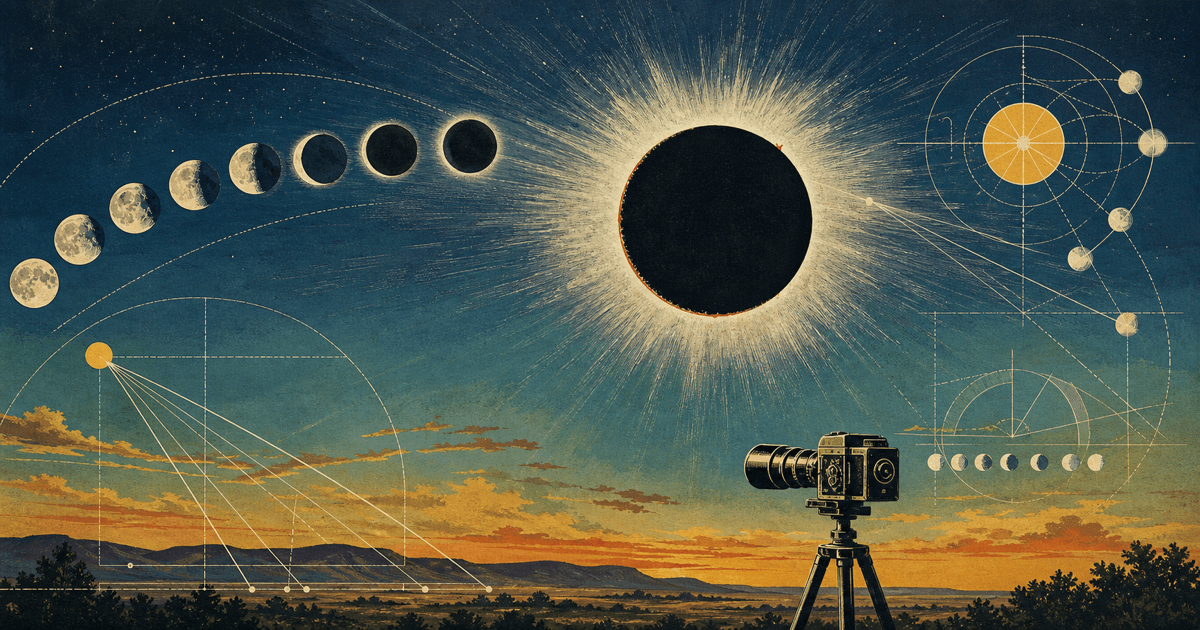
3 min read
What Is a Solar Eclipse?
A plain-language guide to solar eclipses: how the Moon covers the Sun, why totality is rare, and what you can see from the path of totality.
3 min read
How to Safely Watch a Solar Eclipse
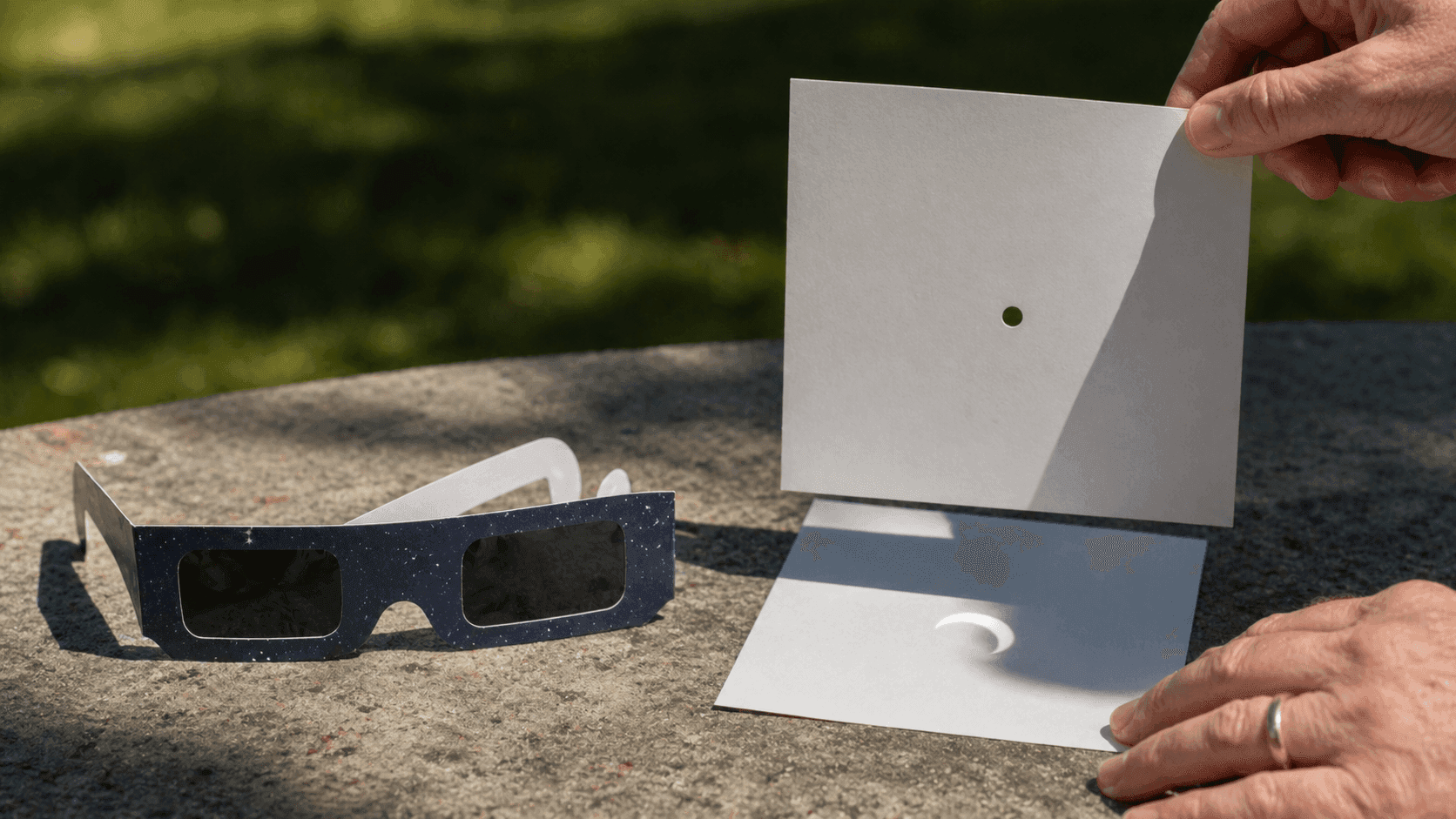
Learn the essential solar eclipse safety rules: ISO 12312-2 eclipse glasses, safe indirect viewing, camera filters, and when totality is safe.
4 min read
The Saros Cycle: How Eclipses Repeat Every 18 Years
The Saros cycle is the roughly 18-year rhythm that links related eclipses. Learn why eclipses repeat and why each one still lands somewhere new.
3 min read
How Eclipse Predictions Work
A clear guide to how solar eclipses are predicted using orbital models, Besselian elements, lunar terrain, and local circumstances.