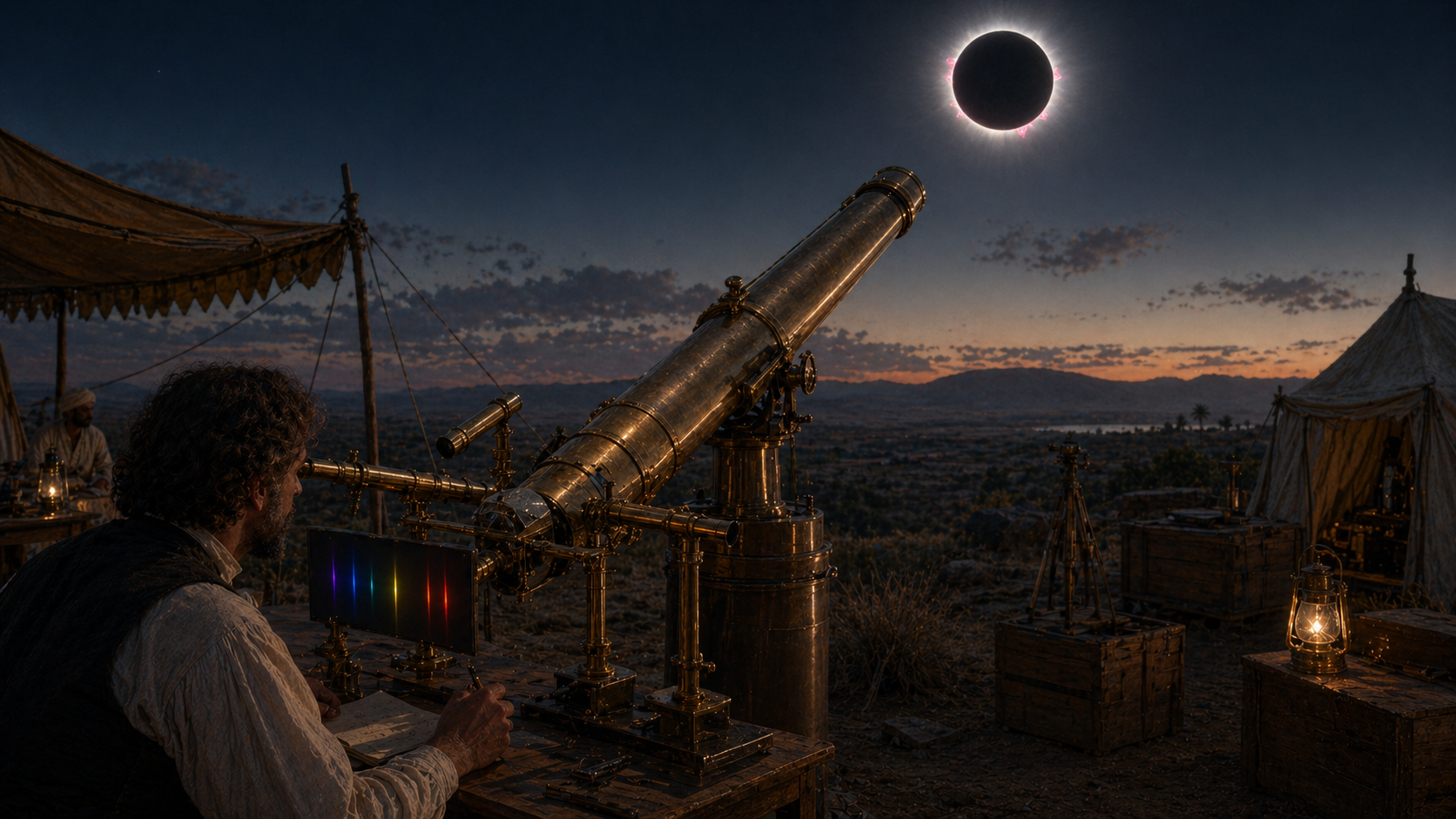
헬륨은 지구에서 발견되기 전에 태양에서 발견되었습니다.
그 이상한 사실은 1868년 8월 18일의 개기 일식으로 시작됩니다. 일식 동안 프랑스 천문학자 피에르 얀센(Pierre Janssen)은 빛을 구성 요소 색상으로 확산시키는 도구인 분광기를 사용하여 태양의 외부 대기를 관찰했습니다.
일식 덕분에 관찰이 가능해졌습니다. 태양의 밝은 얼굴이 달에 의해 가려지면서 태양의 홍염과 채층을 연구하기가 더 쉬워졌습니다. Janssen은 익숙한 나트륨 선과 일치하지 않는 밝은 노란색 스펙트럼 선을 보았습니다.
그 선은 뭔가 새로운 것을 가리켰습니다.
분광학은 이클립스 과학을 바꾸었습니다
분광학 이전에는 일식 관찰자들은 코로나와 홍염의 모양, 색상, 밝기를 설명할 수 있었습니다. 분광학은 새로운 질문을 추가했습니다: 태양은 무엇으로 만들어졌나요?
각 화학 원소는 빛에 패턴을 남깁니다. 이러한 패턴은 지문과 같은 역할을 합니다. 천문학자들은 태양에서 나오는 빛과 실험실에 있는 알려진 물질에서 나오는 빛을 비교함으로써 멀리 있는 원소를 식별할 수 있었습니다.
1868년 인도의 일식 동안 Janssen은 태양의 홍염에 이 방법을 사용했습니다. 그는 스펙트럼의 나트륨 부분 근처에 노란색 선을 발견했지만 나트륨이 정확히 어디에 있어야 하는지는 알 수 없었습니다.
그 차이는 파장에서는 작지만 의미에서는 엄청났습니다.
Janssen, Lockyer, 그리고 새로운 요소
Janssen은 일식 후에도 계속 연구했으며 관련 파장을 분리하여 개기성 밖에서 동일한 태양선을 관찰하는 방법을 찾았습니다.
영국에서 노먼 로키어(Norman Lockyer)는 1868년 말에 독립적으로 동일한 노란색 선을 관찰했습니다. 로키어는 이 선이 아직 지구에 알려지지 않은 원소에서 나온 것이라고 주장했습니다. 그와 화학자 에드워드 프랭클랜드(Edward Frankland)는 태양과 관련된 그리스 이름인 Helios에서 헬륨이라는 이름을 제안했습니다.
그것은 대담한 생각이었습니다. 과학자들은 지상의 광물, 가스, 화합물에서 원소를 발견하는 데 익숙했습니다. 헬륨은 일반적인 순서를 뒤집었습니다. 처음에는 햇빛에서 발견되었고 나중에 지구에서 분리되었습니다.
지상의 헬륨은 윌리엄 램지가 우라늄 광물에서 발견한 1895 때까지 분리되지 않았습니다.
일식이 도움이 된 이유
태양의 밝은 표면은 일반적으로 홍염과 채층에서 나오는 희미한 빛을 압도합니다. Totality는 몇 분 동안 그 눈부심을 제거합니다.
그 짧은 간격은 태양의 숨겨진 층을 드러내기에 충분합니다. 이는 코로나 일식 관측의 기본 원리와 동일합니다. 즉, 광구를 차단하면 희미한 구조가 보이게 됩니다.
1868년의 일식은 과학사에서 적절한 순간에 찾아왔습니다. 분광기는 유색광선을 화학적 증거로 바꿀 수 있을 만큼 강력해졌습니다. 일식 탐험은 천문학자들에게 임시 자연 실험실을 제공했습니다.
헬륨이 바꾼 것
헬륨은 이제 익숙합니다. 풍선, 극저온 장치, MRI 기계, 누출 감지, 심해 호흡 혼합물 및 태양 물리학은 모두 다양한 방식으로 헬륨을 포함합니다. 그러나 그 발견은 우주가 지구 너머의 화학을 드러낼 수 있다는 것을 상기시켜주었습니다.
태양은 더 이상 단지 밝은 원반이나 하늘에 떠 있는 시계가 아니었습니다. 그것은 수백만 킬로미터 떨어진 곳에서도 연구할 수 있는 가스, 온도, 운동 및 요소를 갖춘 물리적 물체였습니다.
그러한 변화는 현대 천체물리학을 창조하는 데 도움이 되었습니다.
짧은 일식, 긴 유산
1868년의 개기일식은 단 몇 분 동안만 지속되었지만, 관찰은 주기율표를 바꾸었습니다.
이 이야기는 또한 일식이 시각적인 광경 그 이상인 이유를 보여줍니다. 이는 드문 관찰 조건입니다. 달이 태양을 가릴 때 숨겨진 것, 즉 코로나, 홍염, 그림자 가장자리, 그리고 이 경우에는 새로운 요소를 측정할 수 있게 됩니다.
다음에 달 가장자리 주변에 분홍색 돌출부가 있는 개기 일식 이미지를 볼 때, 동일한 태양 특징이 헬륨을 드러내는 데 도움이 되었다는 것을 기억하십시오.
소스 및 관련 가이드
- 1868년 일식 동안 처음 관찰된 헬륨에 대한 Purdue Chemistry의 역사 노트는 Janssen, Lockyer 및 나중에 지구에서 헬륨이 분리된 것을 요약합니다.
- 과학사 연구소의 헬륨 발견의 역사는 Janssen의 일식 관찰과 Lockyer의 독립적인 작업을 설명합니다.
- 브리태니커의 Joseph Norman Lockyer 항목은 Lockyer의 태양 분광학에 대한 전기적 맥락을 추가합니다.
- 관련 SolarWatch 가이드: 태양 코로나, 일식 접촉 시간, 일식 예측 작동 방식 및 일식 안전.
SolarWatch에서 확인하세요
SolarWatch는 전체가 태양의 숨겨진 대기를 드러낼 때 정확한 관측 창을 계획하는 데 도움을 줍니다. 밝은 광구가 가려지는 시기와 필터를 다시 켜야 하는 시기를 이해하려면 현지 접촉 시간을 사용하십시오.