Solar Eclipse Guide 2026-2027: When, Where & How to See the Next Total Solar Eclipse

Your complete guide to upcoming solar eclipses. Learn when the next total solar eclipse happens, where to see it, and how SolarWatch helps you plan your eclipse experience.

Last updated: 2026-04-11
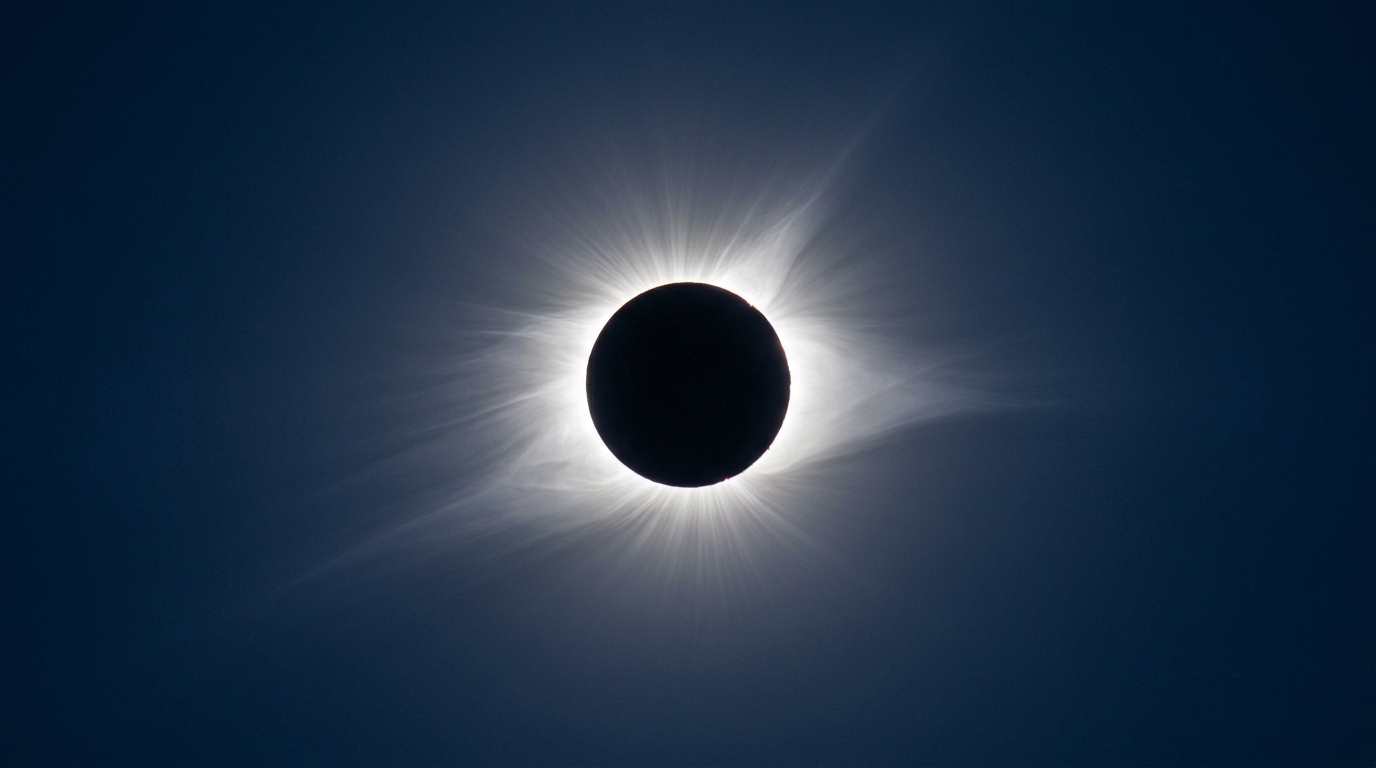
Solar eclipse corona during totality

A solar eclipse is one of nature's most awe-inspiring spectaclesโ€”when the moon passes between the sun and Earth, temporarily turning day into night. Whether you're a seasoned eclipse chaser or preparing for your first experience, here's everything you need to know about upcoming solar eclipses and how to make the most of them.

Quick Answer

  • Next total solar eclipse: August 12, 2026 โ€” visible from Iceland, Spain, and Greenland
  • Next total solar eclipse in North America: August 2, 2027 โ€” visible from Morocco, Spain, and Libya
  • How to plan: Use SolarWatch's interactive eclipse map to explore paths and local circumstances for any location
  • Safety first: Always use certified solar filters (ISO 12312-2) when viewing any partial eclipse phase

What Is a Solar Eclipse?

Diagram showing alignment of sun, moon, and Earth during a solar eclipse

A solar eclipse occurs when the moon's orbit brings it directly between the sun and Earth, casting a shadow on Earth's surface. There are three main types:

Total Solar Eclipse

The moon completely covers the sun, revealing the sun's ethereal corona. This is the most dramatic type, but it's only visible from a narrow path (typically 100-200 km wide). Outside this path, observers see a partial eclipse.

Duration: Totality lasts from a few seconds up to 7.5 minutes (though most are 2-4 minutes).

Annular Solar Eclipse

The moon passes in front of the sun but is too far from Earth to completely cover it, leaving a bright "ring of fire" around the moon's silhouette.

Partial Solar Eclipse

The moon only covers part of the sun. No totality occurs, but with proper eye protection, you can observe the moon taking a "bite" out of the sun.


Upcoming Solar Eclipses

DateTypeVisible From
August 12, 2026TotalIceland, Spain, Greenland
February 6, 2027AnnularArgentina, Chile, Atlantic
August 2, 2027TotalMorocco, Spain, Libya, Egypt
January 26, 2028AnnularSouth America, Atlantic, Spain
July 22, 2028TotalAustralia, New Zealand

August 12, 2026 โ€” Total Solar Eclipse

The first total solar eclipse since April 2024 crosses the Arctic, giving Iceland, northern Spain, and Greenland front-row seats to totality. Major cities near the path include:

  • Reykjavik, Iceland โ€” totality ~2m 15s
  • Bilbao, Spain โ€” near the southern edge of the path
  • Nuuk, Greenland โ€” deep in the path

Partial phases will be visible across most of Europe, northern Africa, and western Russia.

August 2, 2027 โ€” Total Solar Eclipse

This eclipse sweeps across the Mediterranean and North Africa, offering accessible viewing from popular destinations:

  • Gibraltar / Southern Spain โ€” partial eclipse
  • Morocco (Tangier, Fez) โ€” near totality path
  • Libya and Egypt โ€” deep in the path with long totality (~6 minutes in some locations)

This will be one of the longest total eclipses of the decade, making it particularly attractive for eclipse chasers.


How to Plan Your Eclipse Experience

Step 1: Know Your Location's Eclipse

Not every eclipse is visible from every location. The first step is finding out when the next eclipse is visible from your cityโ€”or planning a trip to the path of totality.

Step 2: Understand Local Circumstances

"Local circumstances" tells you exactly what you'll see from a specific point:

  • Contact times โ€” When the moon first touches the sun (first contact), when totality begins (second contact), when totality ends (third contact), and when the moon fully leaves the sun (fourth contact)
  • Magnitude โ€” How much of the sun's diameter is covered (1.0 = total)
  • Obscuration โ€” The percentage of the sun's area covered
  • Sun altitude โ€” How high the sun is in the sky during maximum eclipse (higher is better)

Step 3: Check the Weather

Cloud cover is the eclipse chaser's biggest enemy. Historical weather data can help you choose a location with the best odds of clear skies along the eclipse path.

Step 4: Prepare Your Gear

  • Certified eclipse glasses (ISO 12312-2) โ€” Required for all partial phases
  • Solar filters for cameras/telescopes โ€” Never look through an unfiltered optical device
  • Pinhole projector โ€” A simple DIY alternative for safe indirect viewing
  • White light solar filter โ€” For photography during partial phases

During totalityโ€”and only during totalityโ€”it is safe to view the eclipse with the naked eye. The moment totality ends, put your glasses back on immediately.


The Easy Way: SolarWatch Eclipse Feature

SolarWatch eclipse catalog feature

SolarWatch now includes a comprehensive Solar Eclipse Catalog covering every solar eclipse from 2000 through 2200. Here's how it helps you plan:

Interactive Eclipse Map

Explore the eclipse path on a zoomable map. Tap anywhere along the path to see local circumstances for that exact locationโ€”contact times, magnitude, obscuration, and sun angle at maximum eclipse.

Eclipse Widget

Add the eclipse countdown widget to your home screen so you always know how many days until the next event. The widget updates automatically and shows the eclipse date, type, and your local visibility.

City-Level Eclipse Info

Check any saved city to see its most recent and next upcoming solar eclipse at a glanceโ€”no need to search separately.

Works Offline

Local circumstances calculations use NASA-derived Besselian elements and run directly on your device โ€” no internet connection required for precise contact times and magnitudes.

Download SolarWatch on the App Store


Solar Eclipse Photography Tips

Solar eclipse photography setup

Capturing the Partial Phases

  • Use a solar filter on your lens at all times during partial phases
  • Settings: ISO 100, f/8, 1/500โ€“1/1000s is a good starting point
  • Use a telephoto lens (200mm minimum, 400mm+ recommended) for detail
  • A tripod is essential for sharp results

During Totality

  • Remove the solar filter โ€” The corona is faint and requires full light transmission
  • Switch to manual exposure: start at ISO 400, f/4, 1/60s and bracket
  • Capture the diamond ring and Baily's beads at second and third contact
  • Use a wide-angle lens for landscape shots showing the shadow cone

Smartphone Photography

Modern smartphones can capture impressive eclipse photos, especially during totality:

  • Use a clip-on solar filter during partial phases
  • Mount your phone on a small tripod
  • During totality, use night mode or manual exposure
  • Don't forget to also experience the moment with your own eyes

Eclipse Safety

Never look directly at the sun without certified eye protection, except during the brief period of total eclipse (totality). Here are the essential safety rules:

Safe Viewing Methods

  • Eclipse glasses certified to ISO 12312-2 standard
  • Solar viewers from reputable vendors (AAS approved)
  • Pinhole projectors โ€” Safe indirect viewing
  • Welding glass โ€” Shade 14 or darker only

Unsafe Viewing Methods

  • Regular sunglasses โ€” Not nearly dark enough
  • Smoked glass โ€” Uneven filtration
  • CDs or DVDs โ€” Insufficient protection
  • Unfiltered cameras, binoculars, or telescopes โ€” Can cause instant eye damage

During Totality

It is completely safe to view the totally eclipsed sun with the naked eye. The moment you see the diamond ring reappear at third contact, immediately look away or put your eclipse glasses back on.


Frequently Asked Questions

When is the next solar eclipse?

The next total solar eclipse occurs on August 12, 2026, visible from Iceland, northern Spain, and Greenland. SolarWatch shows you every upcoming eclipse and whether it's visible from your location.

How often do solar eclipses happen?

Solar eclipses occur 2-5 times per year, but total solar eclipses at any given location are rareโ€”roughly once every 375 years on average for any specific spot.

What is the path of totality?

The path of totality is the narrow strip on Earth's surface where the moon completely covers the sun. It's typically 100-200 km wide and thousands of kilometers long. Only within this path can you experience totality.

Can I see a solar eclipse from my location?

It depends on the eclipse. SolarWatch shows you exactly which eclipses are visible from any saved city, including how much of the sun will be covered and at what time.

How accurate are eclipse predictions?

Modern eclipse predictions are extremely accurateโ€”typically within seconds for contact times. SolarWatch uses NASA-derived Besselian elements for precise on-device calculations.


Start Planning Your Eclipse Experience

Explore every solar eclipse from 2000 to 2200 with SolarWatch's interactive eclipse catalog. See local circumstances, track eclipse paths, and never miss an event.

Download SolarWatch on the App Store

SolarWatch Features for This Guide

  • Solar Eclipse Catalog
  • Eclipse Interactive Map
  • Eclipse Widget
  • Local Circumstances
  • Eclipse Countdown
Download SolarWatch