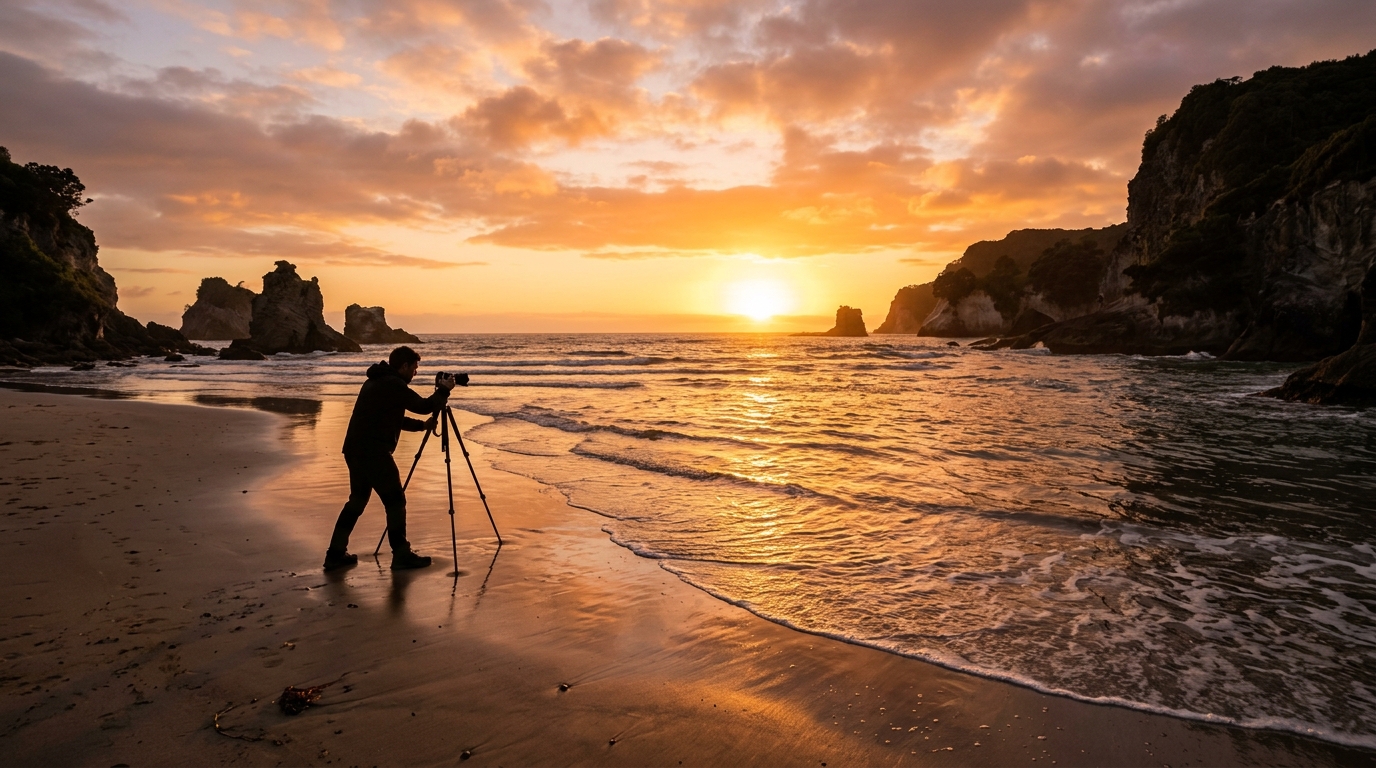
Golden hour is the period shortly after sunrise and shortly before sunset when daylight is softer, warmer, and more flattering for photography. To find golden hour, you need to know your exact sunrise and sunset times—golden hour typically occurs during the hour after sunrise and the hour before sunset, though the exact duration varies by location and season.
Quick Answer
- Morning golden hour: Starts at sunrise, lasts 40-60 minutes
- Evening golden hour: Starts 40-60 minutes before sunset, ends at sunset
- Best way to find it: Use a sun tracking app like SolarWatch that calculates golden hour for your exact location
What Is Golden Hour?

Golden hour is the time of day when the sun is low in the sky—between 0° and 6° above the horizon. During this time:
- Light is warmer - The sun's rays travel through more atmosphere, filtering out blue light and leaving warm golden tones
- Shadows are softer - Low sun angle creates long, gentle shadows that add depth without harsh contrast
- Colors are richer - Warm light enhances skin tones, landscapes, and architectural details
- Dynamic range is manageable - The difference between highlights and shadows is reduced, making exposure easier
Morning vs Evening Golden Hour
| Morning Golden Hour | Evening Golden Hour | |
|---|---|---|
| Starts | At sunrise | ~60 min before sunset |
| Ends | ~60 min after sunrise | At sunset |
| Light quality | Cleaner, more transparent | Warmer, more dramatic |
| Atmosphere | Often calmer, less wind | More dust, more colors |
| Crowds | Fewer people | More activity |
How to Calculate Golden Hour
Golden hour occurs when the sun is between 0° and 6° elevation above the horizon. You can estimate it:
1. Find your local sunrise and sunset times - Search "[your city] sunset time today"
2. Morning golden hour - From sunrise until about 40-60 minutes after
3. Evening golden hour - From about 40-60 minutes before sunset until sunset
However, the exact timing depends on:
- Your latitude - Higher latitudes have longer golden hours in summer
- Season - Winter golden hours are shorter; summer golden hours are longer
- Terrain - Mountains and hills can block or accelerate sunset
- Weather - Clouds can enhance or eliminate golden hour entirely
The Easy Way: SolarWatch App

Calculating golden hour manually is tedious, especially when you're planning a shoot days or weeks in advance. SolarWatch does it automatically:
Features That Help You Find Golden Hour
- Precise golden hour times - Calculated for your exact GPS location
- Golden hour quality score - Premium feature that predicts how good the light will be based on weather and atmospheric conditions
- AR sun finder - Point your phone to see where the sun will be during golden hour
- Golden hour alarms - Get notified 30 minutes before golden hour starts
- Multi-location planning - Save favorite photography spots and check their golden hour times
- Yearly sun calendar - Plan shoots weeks or months ahead
Golden Hour Widget
Add the SolarWatch widget to your home screen for instant golden hour times without opening the app.
Download SolarWatch on the App Store →
Golden Hour Photography Tips

Best Camera Settings for Golden Hour
- Shoot in RAW - Capture maximum dynamic range for post-processing
- White balance: Shade or Cloudy - Emphasize warm tones (5000-6500K)
- Aperture: f/8 to f/16 - For landscapes, get everything in focus
- ISO: 100-400 - Keep noise low when there's still plenty of light
- Don't overexpose highlights - The sun can blow out easily
Subjects That Shine in Golden Hour
- Portraits - Warm, flattering light on skin
- Landscapes - Long shadows add depth and dimension
- Architecture - Buildings glow against blue sky
- Nature - Animals, flowers, and foliage look richer
- Silhouettes - Position subjects in front of the setting sun
What to Avoid
- Midday sun - Harsh shadows and blown highlights
- Overcast days - Clouds can block golden hour entirely
- Showing up late - Golden hour ends quickly; arrive 30 minutes early
Golden Hour vs Blue Hour

Golden hour isn't the only magical time for photographers. Blue hour occurs just before sunrise and just after sunset, when the sun is 4° to 8° below the horizon.
| Golden Hour | Blue Hour | |
|---|---|---|
| Light color | Warm, orange, yellow | Cool, blue, purple |
| Best for | Portraits, landscapes | Cityscapes, night photography |
| Duration | 40-60 minutes | 20-40 minutes |
| Sky | Orange/pink horizon | Deep blue gradient |
Many photographers plan shoots that capture both—the golden hour for warm portraits, then blue hour for moody cityscapes.
Learn more about blue hour →
Frequently Asked Questions
How long does golden hour last?
Golden hour typically lasts 40-60 minutes, but this varies by latitude and season. Near the equator, it's shorter (30-40 minutes). At higher latitudes in summer, it can last 2+ hours.
What time is golden hour today?
Golden hour times change daily based on the sun's position. Check golden hour for your location →
Is golden hour the same every day?
No. Sunrise and sunset times shift throughout the year, so golden hour times change by 1-2 minutes per day. They also vary significantly by season.
Can golden hour happen on cloudy days?
Clouds can block direct sunlight, eliminating the golden effect. However, scattered clouds can create dramatic light rays and more colorful sunsets.
What's the difference between golden hour and magic hour?
They're often used interchangeably, but some photographers distinguish them: golden hour refers specifically to the warm, golden light, while magic hour can also include blue hour and twilight.
Related Articles
- How to Find Blue Hour for Photography →
- How to Photograph a Sunset →
- How to Plan Outdoor Photos by Sun Position →
Get Golden Hour Alerts
Never miss golden hour again. Download SolarWatch for precise golden hour times, quality predictions, and alerts.