
 Engin Kurutepe
On August 12, 2026, a total solar eclipse crossed the Arctic, North Atlantic, Iceland, Spain, and the western Mediterranean. It was the first total solar eclipse visible from Spain since 1959 and the first on the Iberian Peninsula in more than a century, making it a major planning target for travelers, families, educators, photographers, and eclipse chasers.
The basic event is simple: the Moon's umbra, its darkest shadow, swept across Earth. Observers inside that narrow path saw the Moon fully cover the Sun and reveal totality. Observers outside the path could still see a partial eclipse, but not the corona or the sudden darkness of totality.
The global maximum occurred near Iceland at about 17:46 UTC, where central-line totality lasted about 2 minutes 18 seconds. In Spain, totality occurred in the evening, so observing conditions depended heavily on Sun altitude and the western horizon.
Where the path goes
The August 12, 2026 eclipse crossed the Arctic, Greenland, Iceland, the North Atlantic and Spain. It illustrates why local circumstances matter: nearby places experienced different contact times, duration and Sun altitude.
Large parts of Europe saw a partial eclipse, but that was not the same experience. Totality was local. Cities inside the path saw the Sun disappear completely, while other cities not far away saw a deep partial eclipse with no naked-eye total phase.
Spain was a high-interest viewing region
A Coruña and Burgos had about 76 and 104 seconds of totality respectively. These city examples do not establish the duration at every point nearby.
A low Sun can be beautiful for photography, but it also raises practical issues. Hills, buildings, haze, and coastal clouds matter more when the eclipse is close to the horizon. For any exact viewing spot, check the Sun altitude at maximum eclipse and make sure the western horizon is open.
| Location | Maximum (CEST, UTC+2) | Sun altitude |
|---|---|---|
| A Coruña | 20:28 | 12° |
| Burgos | 20:29 | 8° |
| Palma | 20:32 | 2° |
These are approximate city maxima, not the beginning or end of totality. Contact times and horizon conditions must be checked for exact coordinates. The low Sun was especially important in Palma.
Iceland and Greenland offer a different eclipse
For eclipse travelers, this is the central planning tension: an easy-to-reach destination is not automatically the best observing site, and a spectacular landscape is not automatically practical. Weather odds, horizon, totality duration, transportation, and backup routes all matter.
Planning lessons from the eclipse
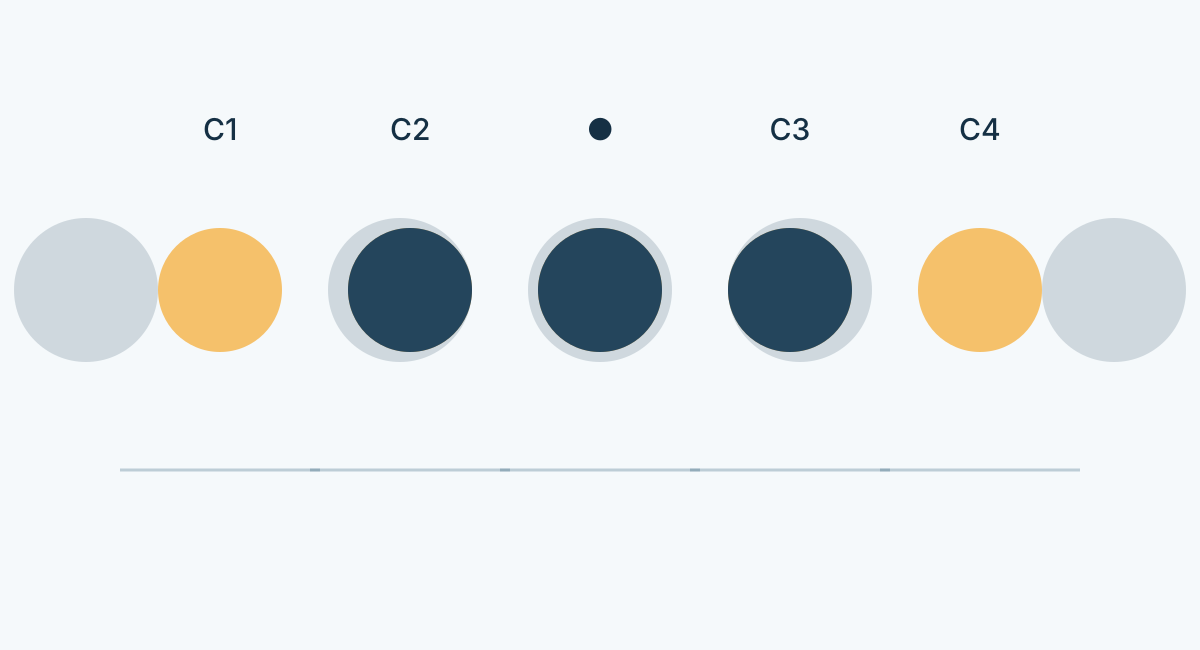
For any future eclipse, start with the local circumstances for each candidate location:
- C1: when the partial eclipse begins
- C2: when totality begins
- Maximum eclipse: the deepest alignment for your location
- C3: when totality ends
- C4: when the partial eclipse ends
- Sun altitude: how high the Sun is above the horizon
- Duration: how long totality lasts, if your location is inside the path
Then add real-world constraints: a clear western horizon, safe parking or transit, weather alternatives, mobile coverage, food and water, and a plan for certified eye protection.
Safety still comes first
Baily's beads and the diamond ring contain direct sunlight and require solar eye protection. Remove protection only once full totality is established, and restore it before any bright sunlight returns. Annular eclipses have no safe unprotected viewing interval; do not use an app countdown as your sole safety check.
Sources and related guides
- NASA's eclipse catalog lists the August 12, 2026 total solar eclipse and summarizes where totality and partial phases were visible.
- NASA GSFC publishes the detailed 2026 Aug 12 eclipse path table.
- Spain's Instituto Geográfico Nacional summarizes the August 12, 2026 eclipse in Spain, including provincial-capital examples and low-Sun viewing notes.
- Timeanddate publishes Spain city and regional circumstances with local timing, duration, and cloud-cover summaries for the August 12, 2026 eclipse.
- Related SolarWatch guides: the path of totality, eclipse contact times, solar eclipse safety, and how eclipse predictions work.
Keep reading
All guides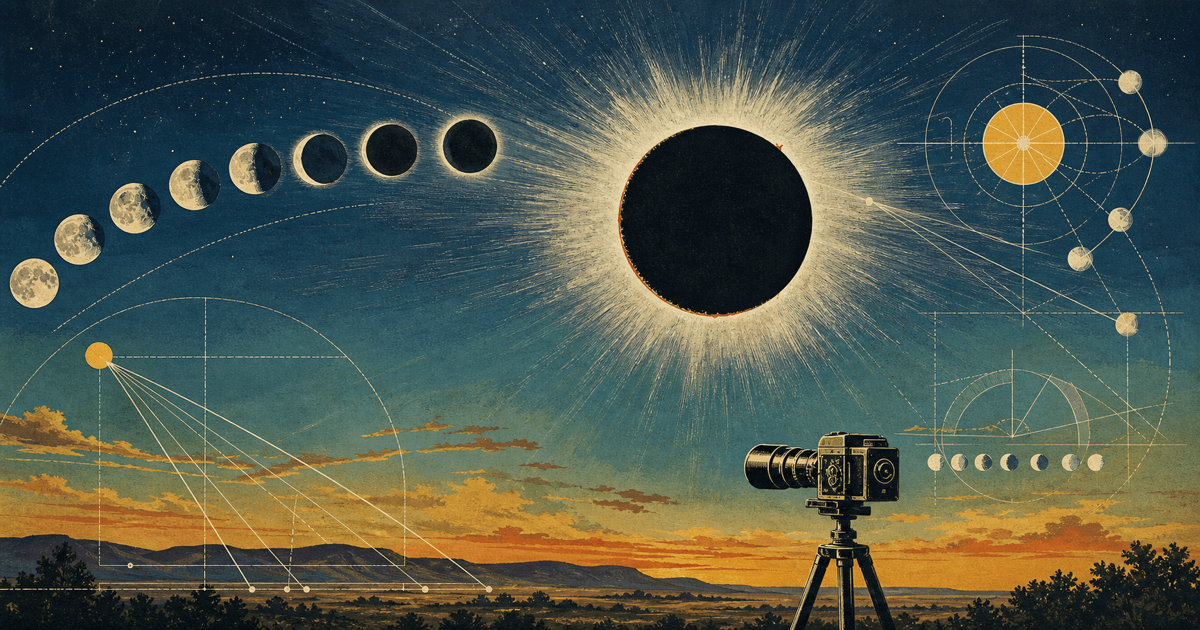
4 min read
The Path of Totality Explained
What the path of totality is, why it is a narrow ribbon, how fast it moves, and why local planning matters.
3 min read
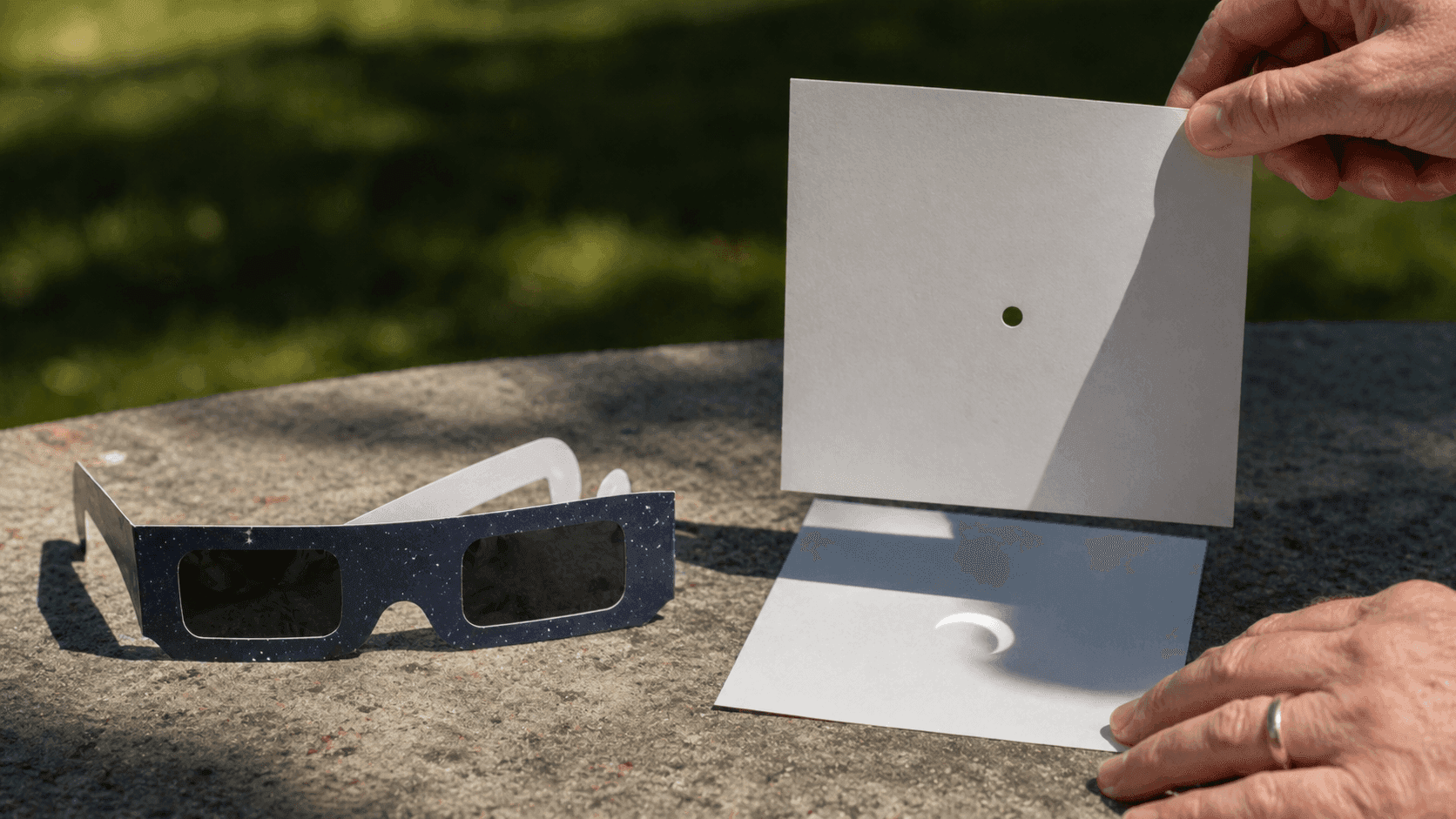
How to Safely Watch a Solar Eclipse
Learn the essential solar eclipse safety rules: ISO 12312-2 eclipse glasses, safe indirect viewing, camera filters, and when totality is safe.
3 min read
C1, C2, C3, C4: The Four Contact Points of an Eclipse
Learn what eclipse contact times mean, why C1 through C4 are local, and how they guide safety, photography, and totality planning.
3 min read
How Eclipse Predictions Work
A clear guide to how solar eclipses are predicted using orbital models, Besselian elements, lunar terrain, and local circumstances.