
 Engin Kurutepe

Helium was discovered in the Sun before it was found on Earth.
That strange fact begins with the total solar eclipse of August 18, 1868. During the eclipse, French astronomer Pierre Janssen observed the Sun's outer atmosphere with a spectroscope, an instrument that spreads light into its component colors.
The eclipse made the observation possible. With the Sun's bright face blocked by the Moon, the Sun's prominences and chromosphere became easier to study. Janssen saw a bright yellow spectral line that did not match the familiar sodium lines.
Spectroscopy changed eclipse science
Before spectroscopy, eclipse observers could describe the shape, color, and brightness of the corona and prominences. Spectroscopy added a new question: what is the Sun made of?
Each chemical element leaves a pattern in light. These patterns act like fingerprints. By comparing light from the Sun with light from known materials in the laboratory, astronomers could identify elements at a distance.
During the 1868 eclipse in India, Janssen used this method on solar prominences. He noticed a yellow line near sodium's part of the spectrum, but not exactly where sodium should be.
Janssen, Lockyer, and a new element
Janssen continued working after the eclipse and found a way to observe the same solar line outside totality by isolating the relevant wavelength.
In England, Norman Lockyer independently observed the same yellow line later in 1868. Lockyer argued that it came from an element not yet known on Earth. He and chemist Edward Frankland suggested the name helium, from Helios, the Greek name associated with the Sun.
That was a bold idea. Scientists were used to discovering elements in earthly minerals, gases, and compounds. Helium reversed the usual order: first seen in sunlight, later isolated on Earth.
Terrestrial helium was not isolated until 1895, when William Ramsay found it in a uranium mineral.
Why an eclipse helped
The Sun's bright surface normally drowns out the faint light from prominences and the chromosphere. Totality removes that glare for a few minutes.
That brief interval is enough to reveal hidden layers of the Sun. It is the same basic principle behind eclipse observations of the corona: block the photosphere, and faint structures become visible.
The 1868 eclipse arrived at the right moment in scientific history. Spectroscopes had become powerful enough to turn colored light into chemical evidence. Eclipse expeditions gave astronomers a temporary natural laboratory.
Sources and related guides
- Purdue Chemistry's history note on helium first observed during the 1868 eclipse summarizes Janssen, Lockyer, and the later isolation of helium on Earth.
- The Science History Institute's history of helium discovery explains Janssen's eclipse observations and Lockyer's independent work.
- Britannica's Joseph Norman Lockyer entry adds biographical context for Lockyer's solar spectroscopy.
- Related SolarWatch guides: the solar corona, eclipse contact times, how eclipse predictions work, and solar eclipse safety.
Keep reading
All guides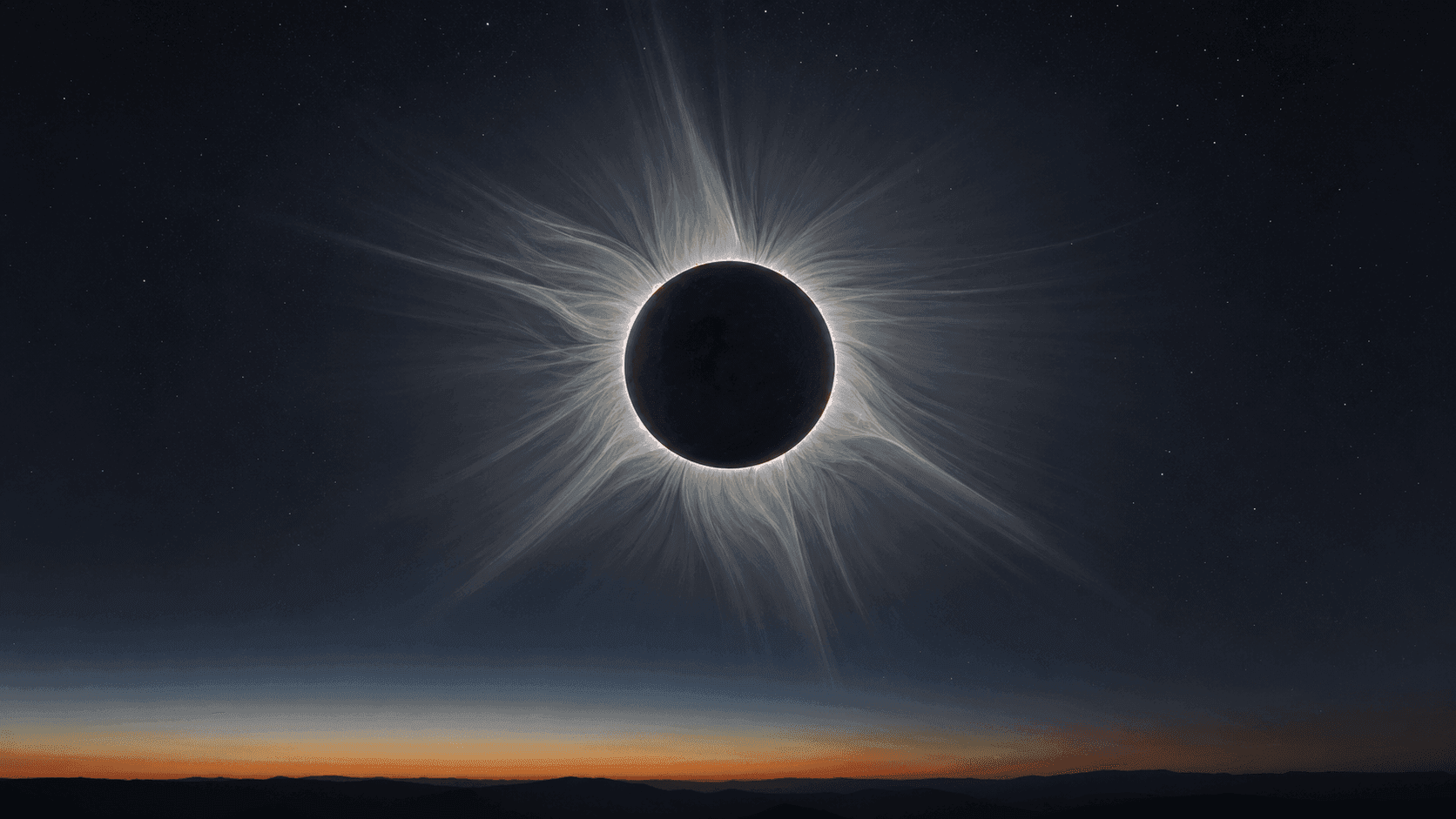
3 min read
The Solar Corona: The Sun's Hidden Crown
The solar corona is the Sun's faint outer atmosphere, visible during totality. Learn why eclipses reveal it and why it is scientifically mysterious.
3 min read
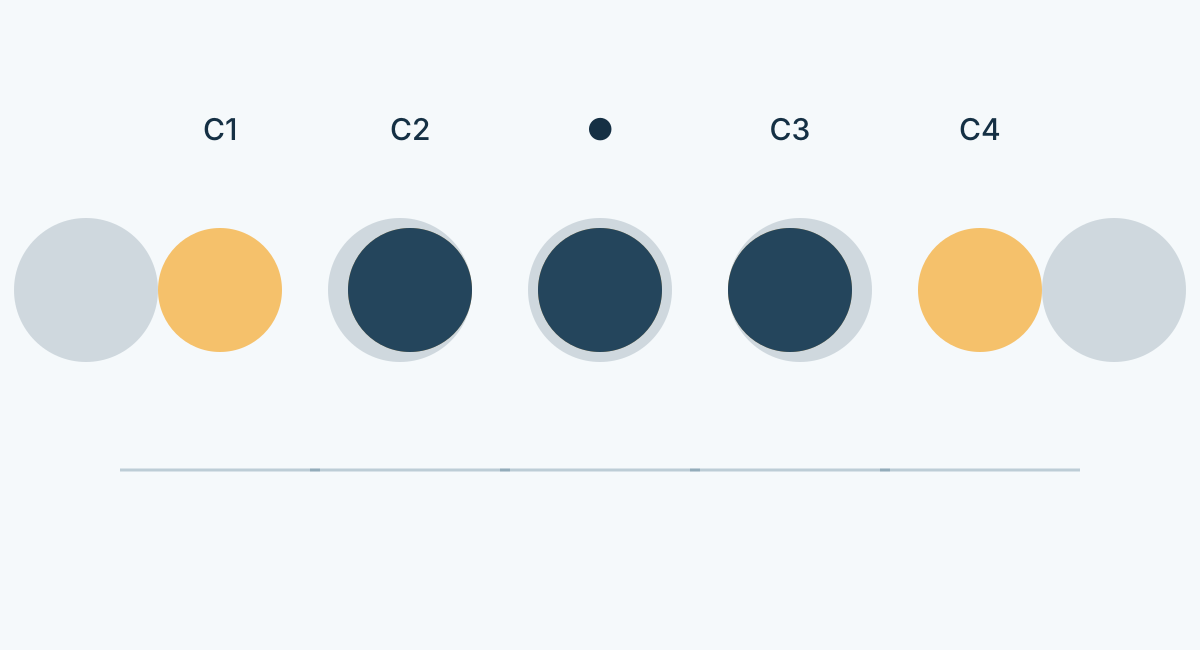
C1, C2, C3, C4: The Four Contact Points of an Eclipse
Learn what eclipse contact times mean, why C1 through C4 are local, and how they guide safety, photography, and totality planning.
3 min read
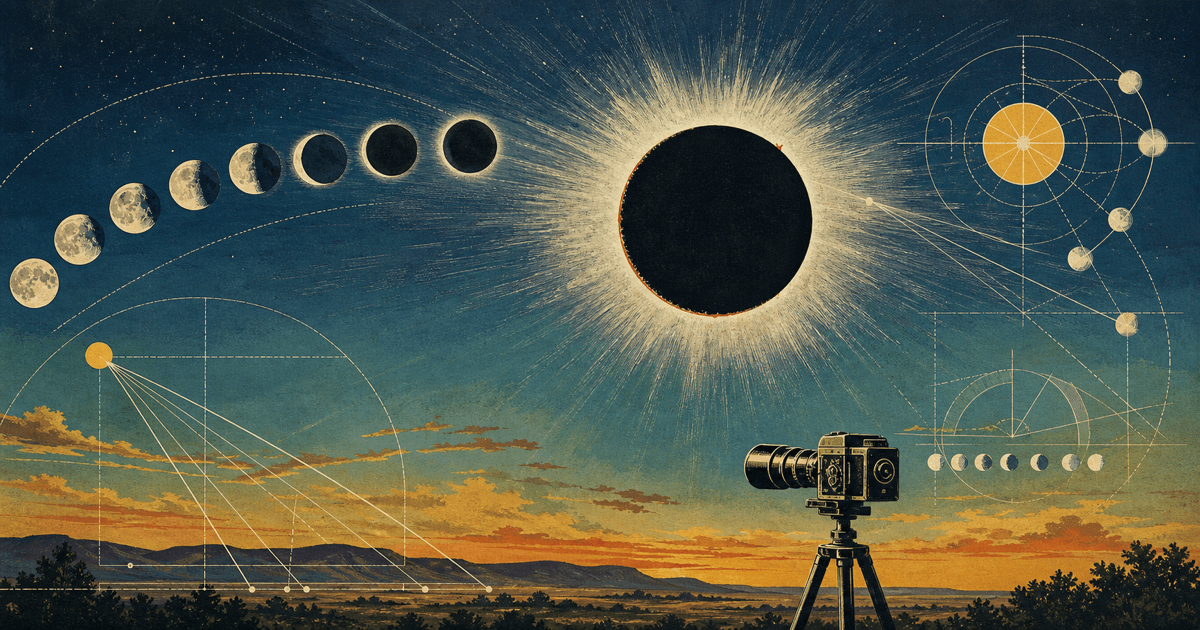
How Eclipse Predictions Work
A clear guide to how solar eclipses are predicted using orbital models, Besselian elements, lunar terrain, and local circumstances.
3 min read
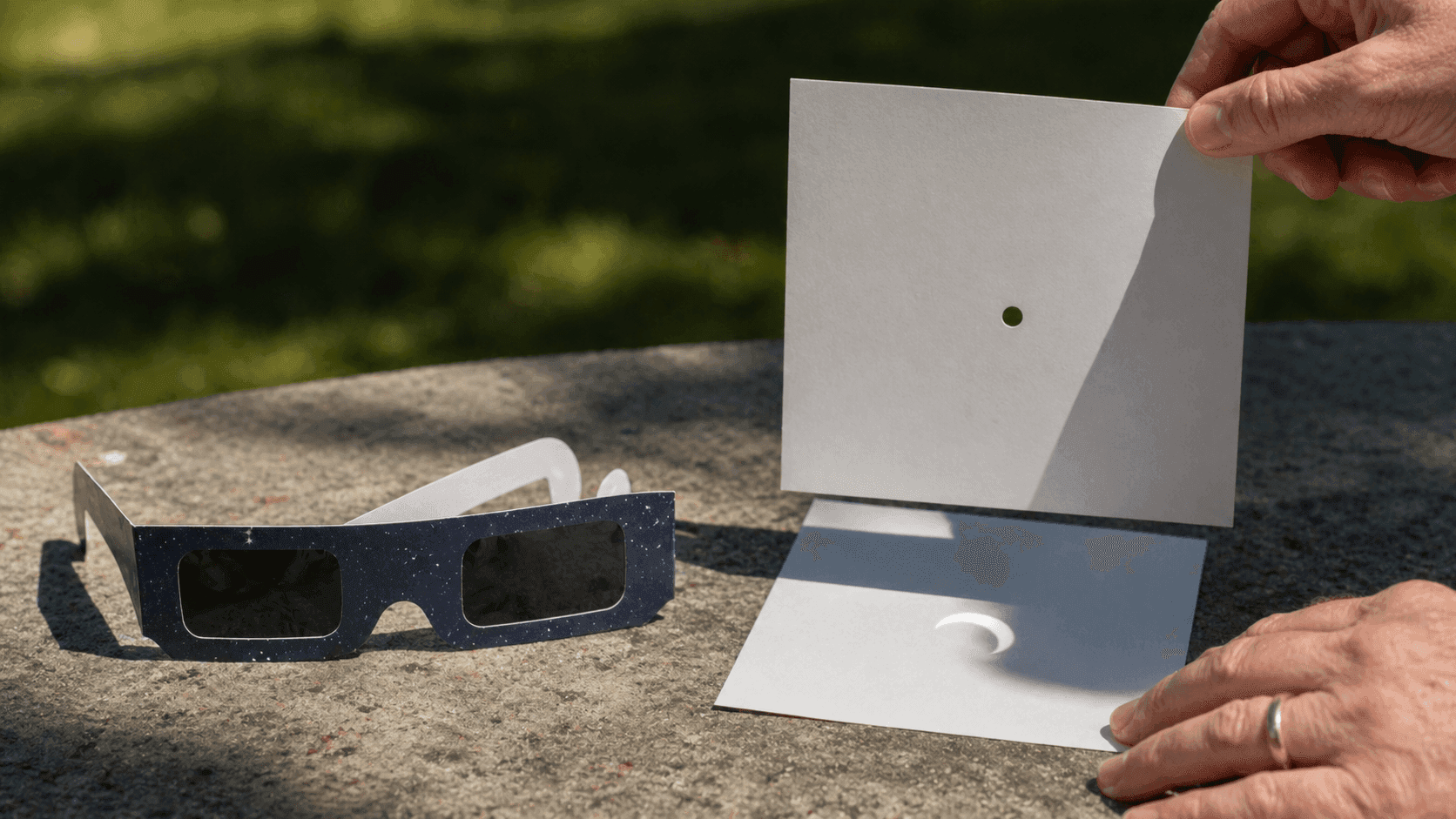
How to Safely Watch a Solar Eclipse
Learn the essential solar eclipse safety rules: ISO 12312-2 eclipse glasses, safe indirect viewing, camera filters, and when totality is safe.