
 Engin Kurutepe
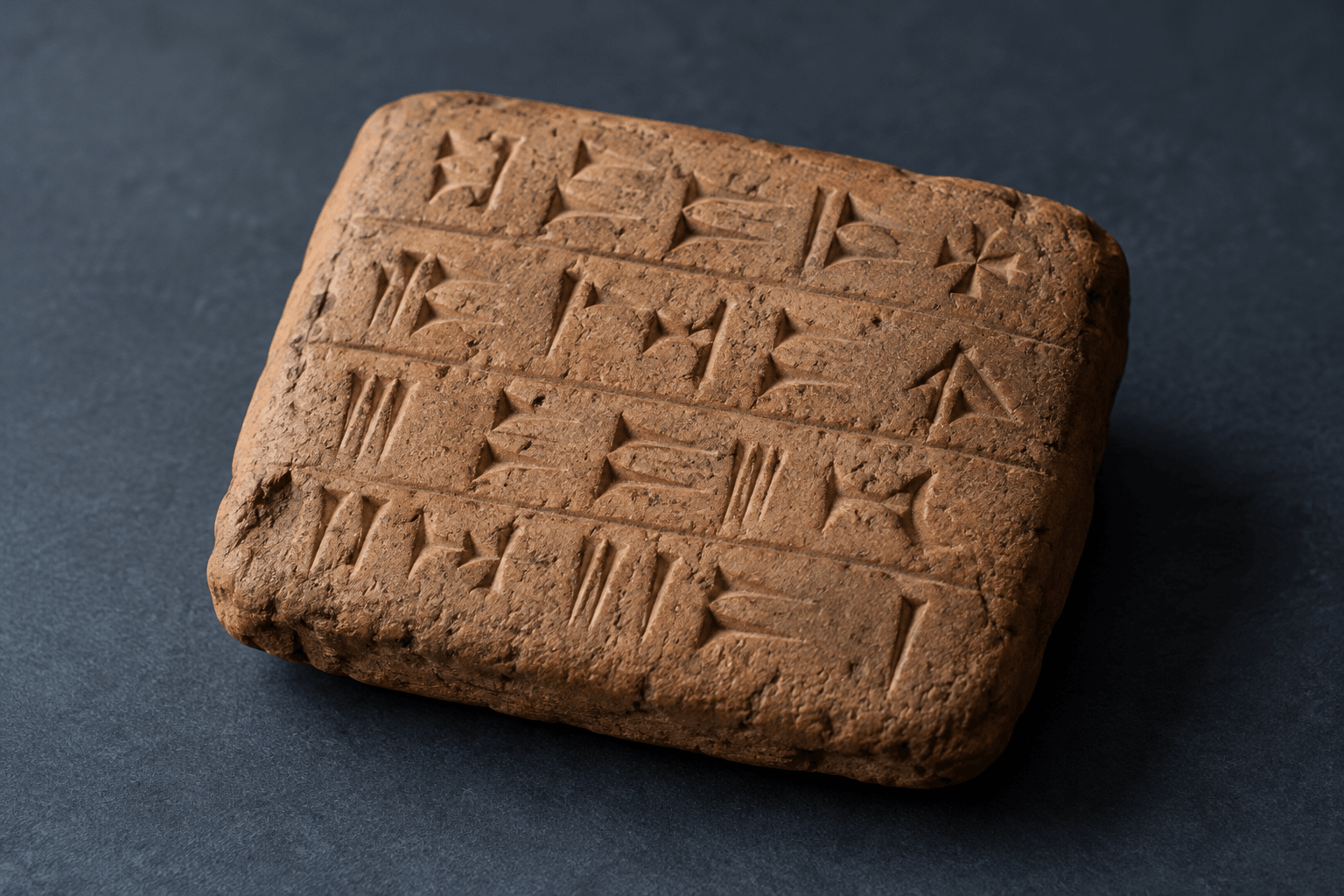
Prediction began with records
Ancient Mesopotamian astronomy was tied to administration, calendars, ritual, and omen interpretation. Eclipses mattered because they were seen as signs with political and religious importance, especially for kings.
Clay tablets were the data storage system. They could hold observations across many years, and later astronomers could compare new events with old ones. A single eclipse might be startling. A long sequence of eclipse records could become a prediction tool.
The Saros rhythm
The best-known eclipse rhythm is the Saros cycle, about 18 years, 11 days, and 8 hours. It links 223 synodic months, 242 draconic months, and 239 anomalistic months.
Those numbers matter because eclipses require several lunar clocks to line up:
- The Moon must be new for a solar eclipse or full for a lunar eclipse.
- The Moon must be near a node, where its tilted orbit crosses the ecliptic.
- The Moon's distance from Earth affects the type and depth of the eclipse.
After one Saros, the geometry is similar enough that a related eclipse can occur. Babylonian astronomers recognized eclipse periodicity through observation and record comparison, even though they did not describe it in modern orbital language.
What they could predict
Ancient prediction was not the same as opening a map and tapping a city.
Babylonian astronomers became especially strong at identifying eclipse possibilities. They could warn that an eclipse was likely during a certain month or watch period. Lunar eclipses were more straightforward because they are visible across a large region wherever the Moon is above the horizon.
Solar eclipses were harder. A solar eclipse may exist globally but miss a particular city entirely. Totality is even narrower. Without modern geodesy and shadow projection, predicting exact local solar eclipse circumstances was far beyond what ancient methods could reliably do.
Omens and science were not separate yet
It is tempting to separate Babylonian astronomy into "religion" and "science," but that is too modern a division. For Babylonian scholars, the sky could be meaningful and patterned at the same time.
An eclipse might be read as an omen, but the work of predicting it required disciplined observation. The desire to interpret signs pushed people to become better record keepers. Better records then made patterns more visible.
In that way, eclipse prediction grew from a mixed world of ritual, mathematics, statecraft, and practical astronomy.
Sources and related guides
- Britannica's overview of eclipses in Assyrian and Babylonian records explains how cuneiform sources changed the study of ancient astronomy.
- NASA's History of Eclipses gives broader historical context for ancient eclipse records.
- NASA GSFC's Periodicity of Solar Eclipses explains the lunar rhythms behind the Saros.
- Related SolarWatch guides: the Saros cycle, how eclipse predictions work, why eclipses do not happen every month, and ancient eclipse myths.
Keep reading
All guides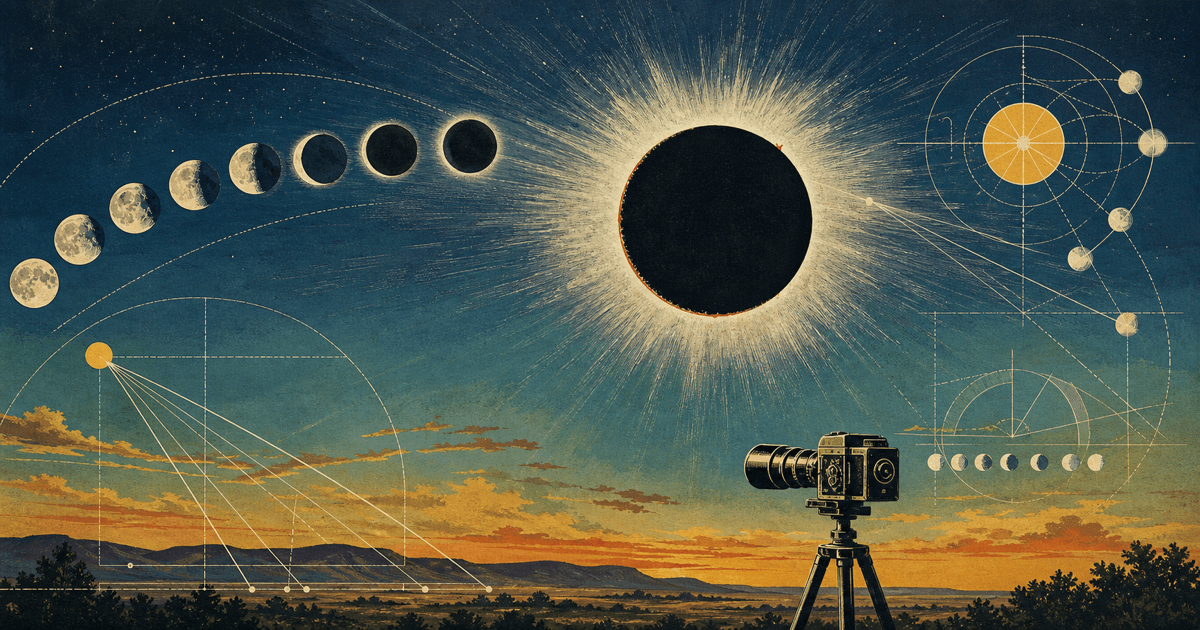
4 min read
The Saros Cycle: How Eclipses Repeat Every 18 Years
The Saros cycle is the roughly 18-year rhythm that links related eclipses. Learn why eclipses repeat and why each one still lands somewhere new.
3 min read
How Eclipse Predictions Work
A clear guide to how solar eclipses are predicted using orbital models, Besselian elements, lunar terrain, and local circumstances.
3 min read
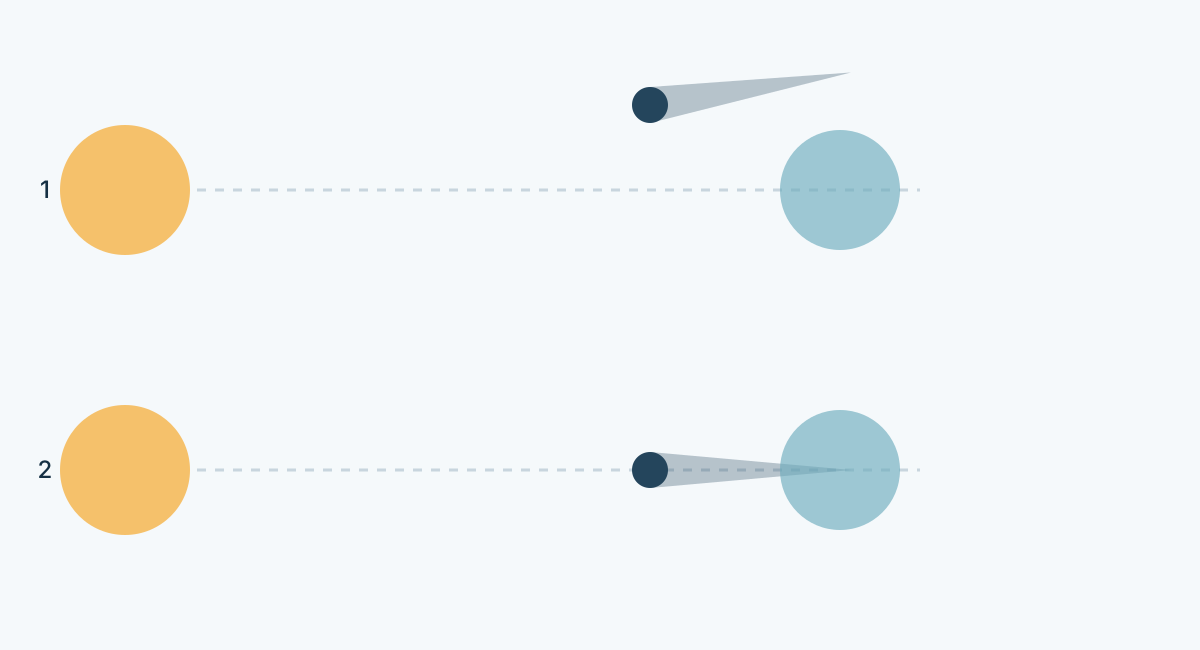
Why Doesn't a Solar Eclipse Happen Every Month?
Solar eclipses need a new Moon plus a node crossing. Learn why the Moon's tilted orbit makes eclipses seasonal instead of monthly.
1 min read
Ancient Eclipse Myths Around the World
A tour of solar eclipse mythology, from dragons and wolves to ancient sky stories that helped people explain sudden darkness.