
 Engin Kurutepe
To plan a wedding or portrait session around sunset, look up the sunset time and sun direction for the venue on the actual date. Then work backwards. Put the portraits that need warm, low light in the last hour before sunset, leave a buffer for delays, and decide whether you want the blue light after sunset too. Weather can't be known months ahead, so the plan should also work under cloud.
Look up the exact place and date
Sunset times change by more than an hour between seasons, and by several minutes between nearby towns. Use the spot where the photos will happen, not the nearest city.
The difference between seasons can be large. In Florence, sunset on 20 June 2026 is at 21:01, with the Sun setting in the northwest. On 12 September it sets at 19:33, almost due west. A timeline copied from a summer wedding would be an hour and a half late in autumn.
Far north in winter, the usual pattern disappears. In Svolvær in Lofoten, on 3 February the Sun rises at 09:15, climbs to only about 5° at midday and sets at 15:17. Under the common convention of golden light as the Sun below about 6°, the whole short day is golden hour, and portraits can happen at lunchtime.
Check where the light will come from
Note the sun's direction at sunset and compare it with the venue. A ceremony facing west in June may put the Sun behind the couple and in the guests' eyes. A terrace that faces east loses direct light long before sunset.
Hills, trees and buildings can end direct sunlight well before the published time. If you can, visit the venue at a similar time of day, or check the horizon on site. Our sun position planning guide covers this in more detail.
Work backwards from sunset
A simple order for an evening session:
- Sunset minus about an hour: couple portraits start. The light is low and warm in most seasons at mid latitudes.
- Sunset minus 15–20 minutes: the final backlit or silhouette shots, if the horizon is clear.
- Sunset to the end of civil twilight: soft, even light and a blue sky. In Florence in June this is about 36 minutes; in winter Lofoten it lasts over an hour.
- Buffer: hold 15–30 minutes in reserve. Ceremonies, speeches and travel between locations run late more often than early.
Share the timeline with the photographer, planner and venue. They'll know local habits, such as how long the walk to a viewpoint takes in heels.
Plan for cloud
A colourful sky can't be forecast months ahead. Build the plan around the time of day, not a guaranteed sunset. Overcast light is flattering for portraits, and a few clouds near the horizon often give the best colour. A few days before the date, check the weather and a sunset quality forecast, and have a sheltered fallback spot.
Plan it in SolarWatch
- Save the venue as a location: search for the town, tap the map button beside the result, move the map so its centre is on the exact spot, and add it to Favorites.
- Open the saved place and use the date button to jump to the wedding date.
- Add Magic Light. The Large size shows morning and evening golden hour, blue hour and sunrise or sunset together.
- Add Sunrise & Sunset to see the sun direction at each event, and Classic Data for a table of all the day's times that's easy to copy into a timeline.
- On a site visit, open AR and point the camera at the horizon to see the sun's path over the real trees and buildings. AR requires SolarWatch Gold, camera and location access, and a supported device.
- Within a few days of the date, the Quality tile (Gold) estimates the chance of a colourful sunset from weather data. It's a forecast, not a guarantee.
All times are shown in the venue's time zone, which helps when you plan a destination wedding from home.
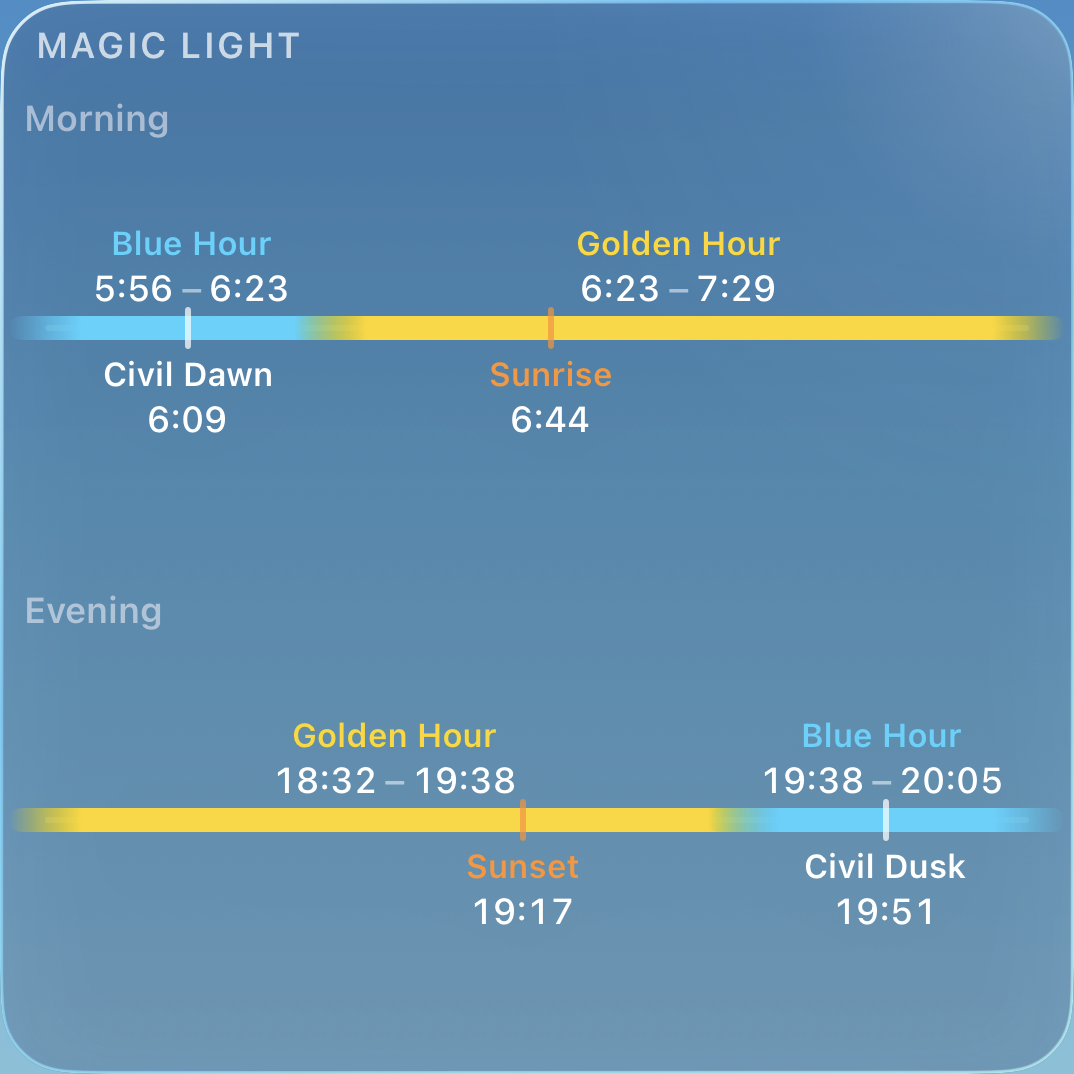
Magic Light · Save a city or exact place · AR · Sunset quality
For more on what golden hour is and isn't, see how to find golden hour.
Keep reading
All guides
2 min read
How to find golden hour for your photo shoot
Find warm, low-angle light using your location, date and Sun position. Check terrain and weather, then choose camera settings for the photograph you want.
3 min read
How to plan a photo shoot around the sun's position
Choose a shooting position, check where the sunlight will fall, and plan for blocked horizons before your next outdoor photo shoot.
1 min read
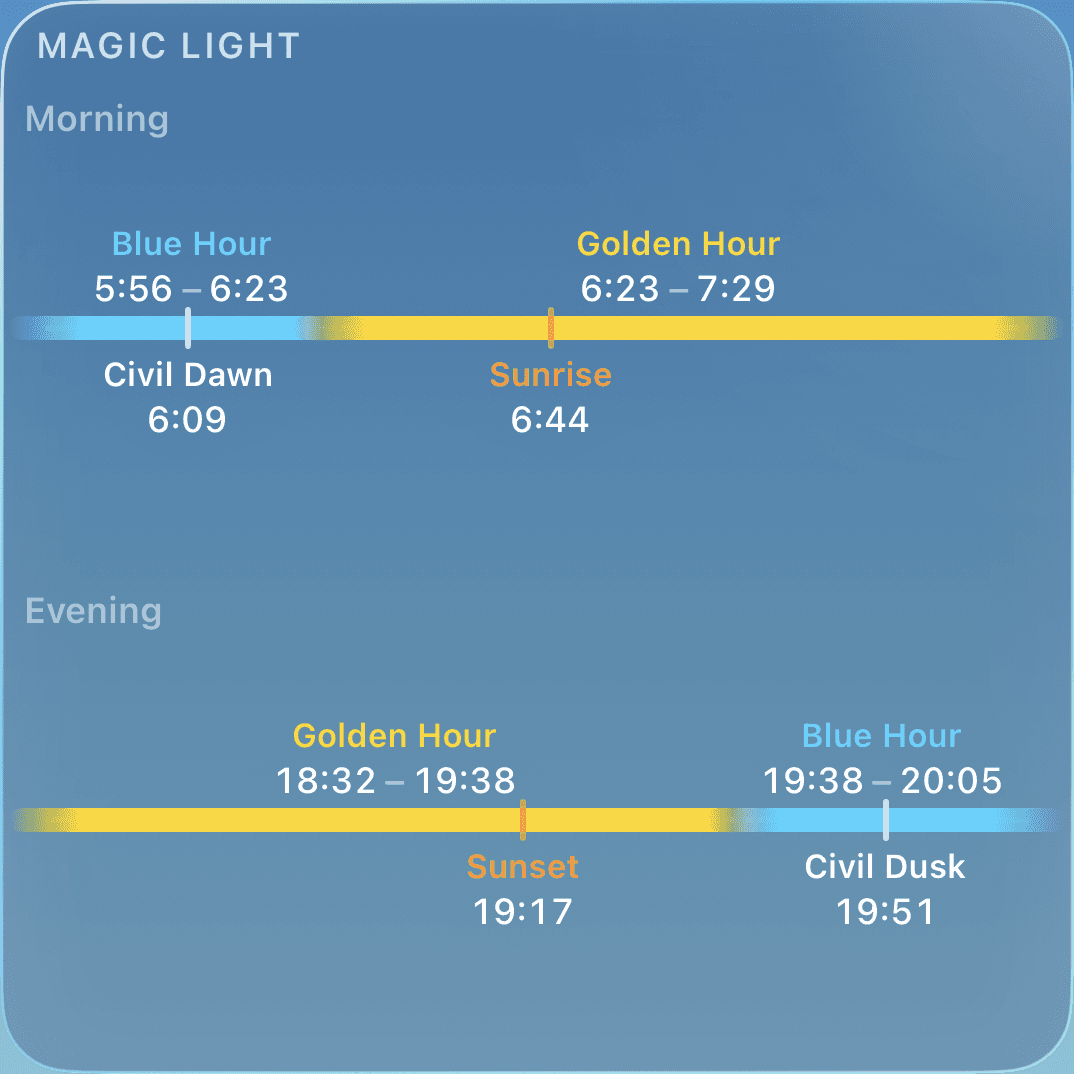
Magic Light
Magic Light · SolarWatch