
 Engin Kurutepe
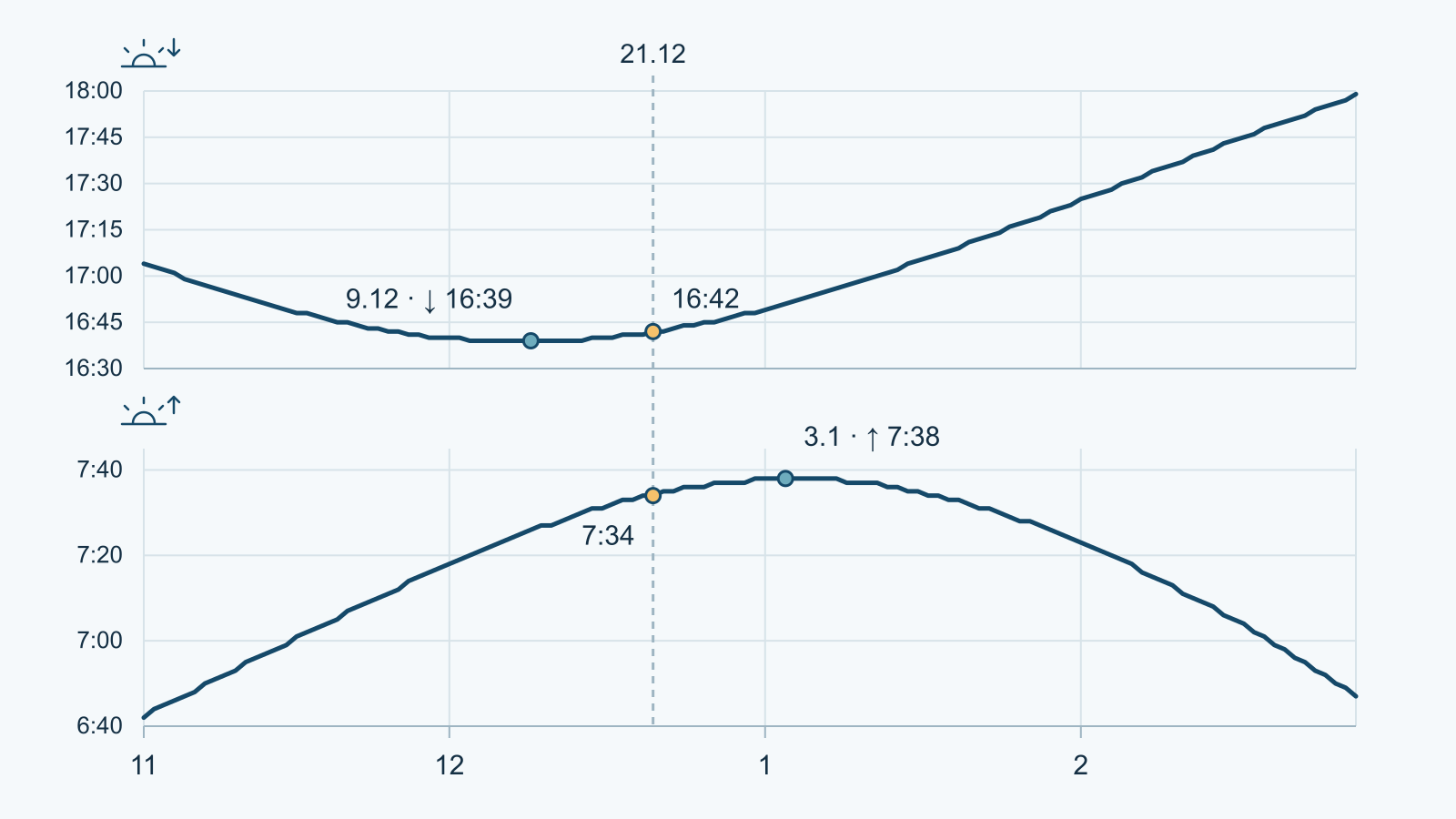
The shortest day of the year in the Northern Hemisphere falls on the December solstice, around 21 December. But the earliest sunset comes days or weeks before it, and the latest sunrise comes days or weeks after it. In Rome the Sun sets earliest around 9 December and rises latest around 3 January.
The reason is that the whole day slides later on the clock in December. Solar noon, the moment the Sun is highest, moves about half a minute later every day. Near the solstice that drift is bigger than the change in day length, so it decides when sunrise and sunset happen.
Three dates, not one
You might expect the shortest day to bring both the darkest evening and the darkest morning. In mid-northern latitudes the three dates are spread over almost a month:
- The earliest sunset, in early or mid-December.
- The shortest day, at the solstice on 21 or 22 December.
- The latest sunrise, in late December or early January.
The evenings start getting lighter well before Christmas, while the mornings keep getting darker into the new year.
Sunset is solar noon plus half the day
The Sun rises and sets at the same distance before and after solar noon. So you can think of sunset as solar noon plus half the day length, and sunrise as solar noon minus half the day length.
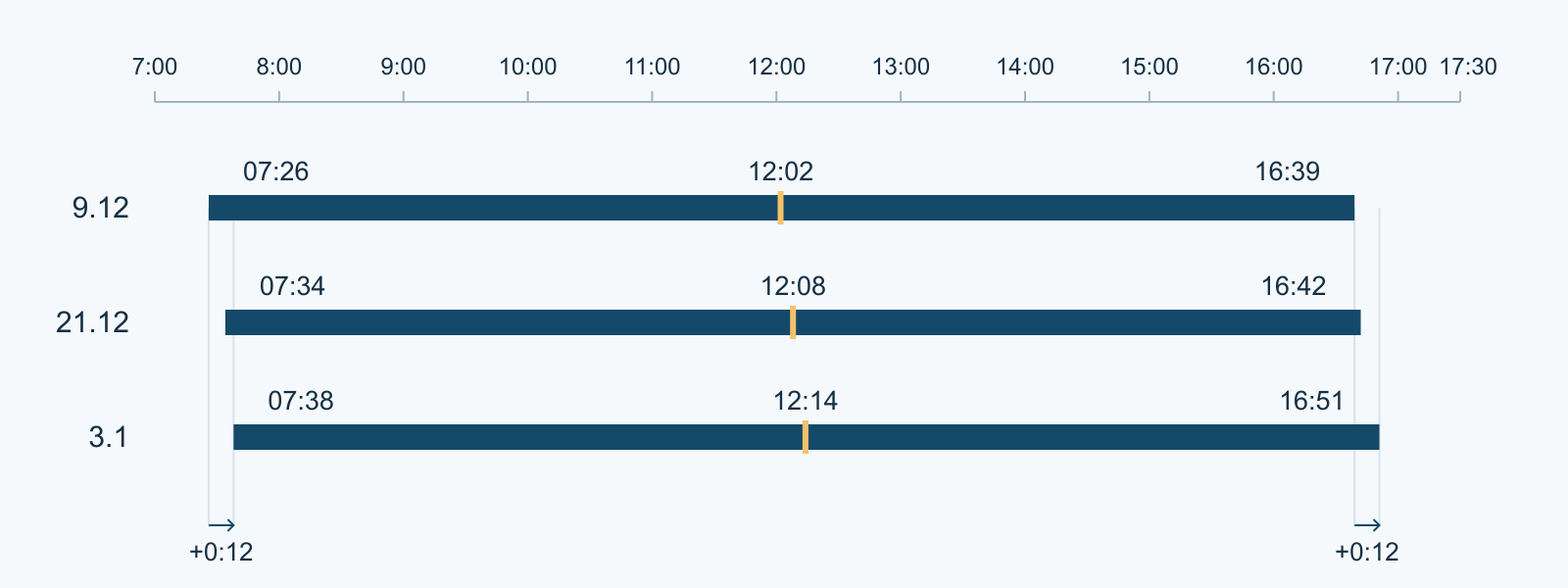
If solar noon stayed at the same clock time all year, the earliest sunset, the latest sunrise and the shortest day would all fall on the solstice. But solar noon moves. In Rome it comes at 11:54 in early November and at 12:14 in early January, by the clock.
In December two things happen at once:
- The day gets shorter, but more and more slowly. Close to the solstice, day length changes by only seconds a day.
- Solar noon moves later by about 29 seconds a day. This pushes both sunrise and sunset later.
In early December the day is still shrinking quickly, and sunsets keep getting earlier. Once half the day shrinks by less than half a minute a day, the drift of solar noon wins and sunsets start moving later again. That turning point is the earliest sunset. The same thing happens in reverse after the solstice: sunrise keeps getting later until the day grows fast enough to outpace the drift.
Rome shows it clearly. On 9 December and on 3 January the day is the same length, about 9 hours 13 minutes. But on 3 January the Sun rises at 7:38 instead of 7:26, and sets at 16:51 instead of 16:39. The whole day has shifted 12 minutes later.
Why solar noon drifts in December
A day on the clock is exactly 24 hours, which is the average length of a solar day, from one solar noon to the next. Real solar days are a little longer or shorter than average, depending on the time of year. Around the December solstice they are the longest of the year, about 24 hours and 30 seconds. So each day, solar noon comes about 30 seconds later by the clock.
There are two causes:
- The tilt of Earth's axis: near both solstices the Sun moves through the sky parallel to the equator, which makes its daily eastward shift against the stars a bit larger than average. Earth has to turn a little further to bring the Sun back to the same place. This adds about 20 seconds to the solar day in both June and December.
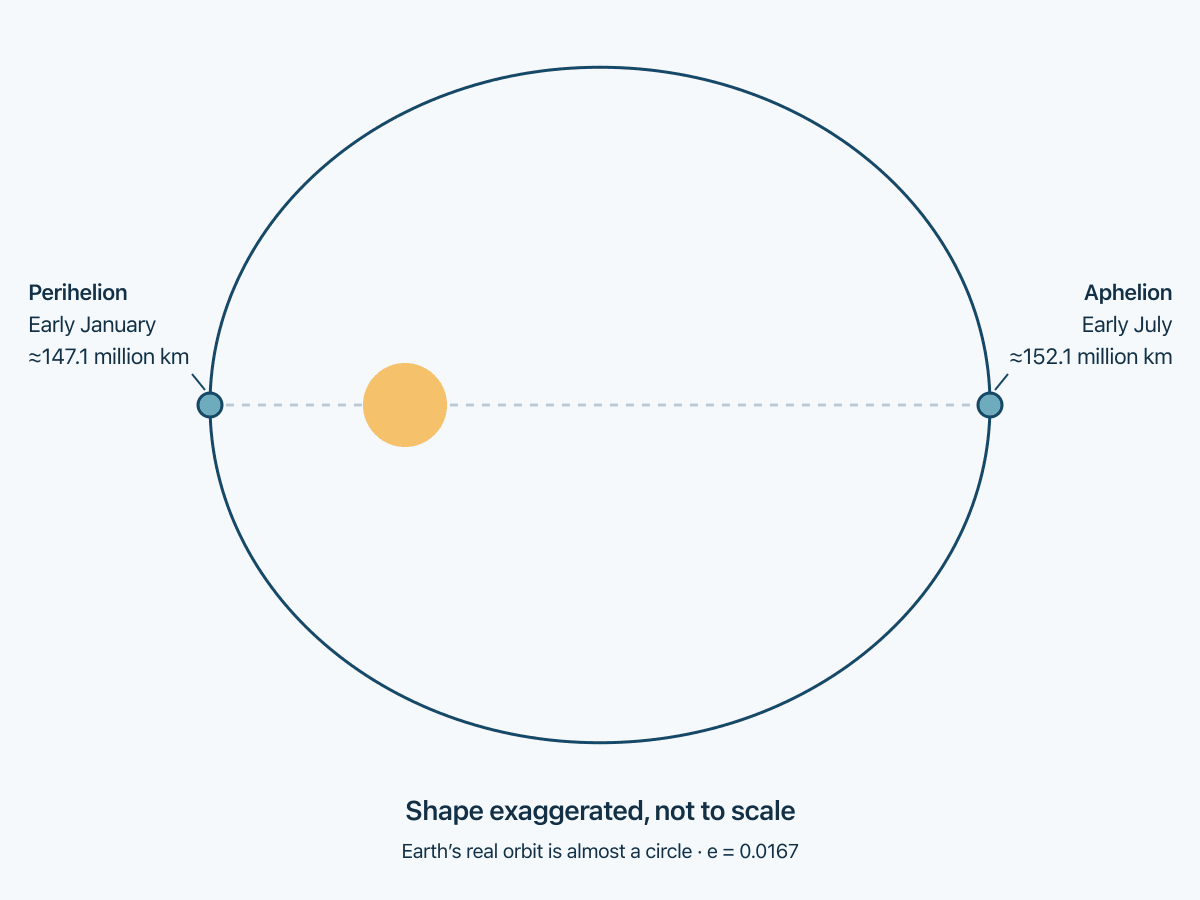
- The shape of Earth's orbit: Earth reaches perihelion, its closest point to the Sun, in early January. There it moves fastest in its orbit, which adds another 8 seconds or so to each solar day. You can read more about this in our guide to perihelion and aphelion. The speed-up near perihelion is Kepler's second law, explained in our guide to Earth's elliptical orbit.
In December both effects add up. In June they partly cancel, because Earth is near aphelion and moves more slowly. The June solar day is only about 13 seconds longer than average. That is why the gap is smaller around the June solstice. In Rome the earliest sunrise comes around 15 June and the latest sunset around 28 June, each about a week from the solstice. In Berlin the gap is three to five days.
Dates for your latitude
How far the earliest sunset lies from the solstice depends on your latitude. Far north, day length changes quickly even near the solstice, so the drift of solar noon wins only in the last few days. Closer to the equator, day length barely changes and the drift wins weeks earlier.
| Place | Latitude | Earliest sunset | Sunset at solstice | Latest sunrise | Sunrise at solstice |
|---|---|---|---|---|---|
| Cairo | 30° N | ~3 Dec, 16:55 | 16:59 | ~10 Jan, 06:52 | 06:47 |
| New York | 41° N | ~8 Dec, 16:28 | 16:32 | ~4 Jan, 07:20 | 07:17 |
| Rome | 42° N | ~9 Dec, 16:39 | 16:42 | ~3 Jan, 07:38 | 07:34 |
| London | 52° N | ~13 Dec, 15:51 | 15:53 | ~30 Dec, 08:06 | 08:04 |
| Berlin | 53° N | ~13 Dec, 15:52 | 15:54 | ~30 Dec, 08:17 | 08:15 |
| Stockholm | 59° N | ~16 Dec, 14:47 | 14:48 | ~27 Dec, 08:45 | 08:43 |
| Reykjavík | 64° N | ~18 Dec, 15:29 | 15:29 | ~25 Dec, 11:23 | 11:22 |
Times are local standard time for the winter of 2026–27, from the US Naval Observatory, and the solstice column uses 21 December 2026. The dates are marked as approximate because sunset stays within the same minute for a week or more around its earliest point.
The differences are small. In Rome the solstice sunset is only 3 minutes later than the earliest one. What changes is the direction: by the solstice, the evenings have already been getting lighter for almost two weeks.
Near the equator and in the south
In Singapore, almost on the equator, day length hardly changes at all, so sunrise and sunset follow solar noon. The earliest sunset comes in early November, at about 18:50, and the latest sunrise in mid-February, at about 07:17. Neither has much to do with the solstice.
In the Southern Hemisphere the pattern is the same, with the seasons flipped. In Sydney the shortest day is the June solstice. The earliest sunset comes around 13 June, at about 16:53, and the latest sunrise around 30 June, at about 07:01. Because the June drift is weaker, the dates lie closer to the solstice than in the north in December. Around the December solstice, Sydney gets its earliest sunrise in early December and its latest sunset in early January.
What it means for your evenings
If you mostly see daylight after work, the darkest part of winter ends before the solstice. In Berlin, the sunset on 30 December is at 16:01, 9 minutes later than its earliest. Sunrise that day is at 8:17, the latest of the winter.
Daylight saving time plays no part here. In most of the Northern Hemisphere clocks are on standard time all through December and January. The shift comes only from the Sun.
To follow the total day length rather than sunrise or sunset alone, see our guide on how much daylight you gain each day. For what happens at the solstice itself, read the solstice explained.
Sources and related guides
- The US Naval Observatory provides sunrise, sunset and solar noon times for any place and date. The times in this article come from it.
- The NOAA solar calculator notes describe how sunrise, sunset and the equation of time are calculated.
- The US Naval Observatory lists dates and times of the solstices.
- Related SolarWatch guides: the solstice explained, perihelion and aphelion and why Earth is closest to the Sun in northern winter.
See it in SolarWatch
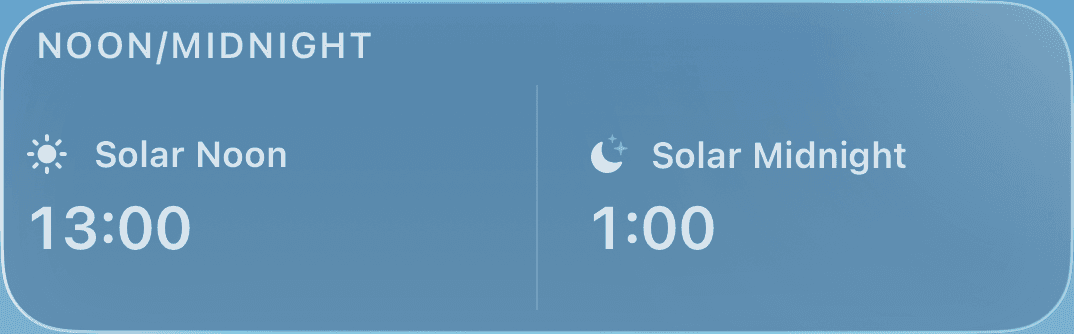
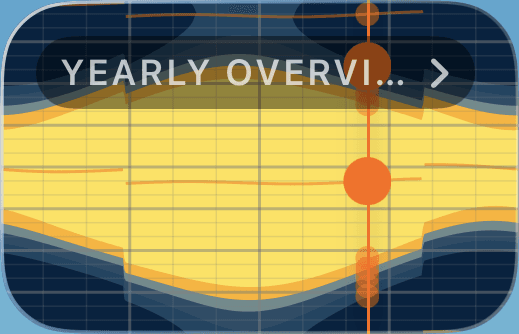
The Sunrise & Sunset tile shows today's sunrise and sunset times where you are. The Noon & Midnight tile shows when solar noon falls, so you can watch it move later through December. In the Yearly Overview, the lowest point of the sunset curve and the highest point of the sunrise curve fall on different dates, on either side of the solstice.
Keep reading
All guides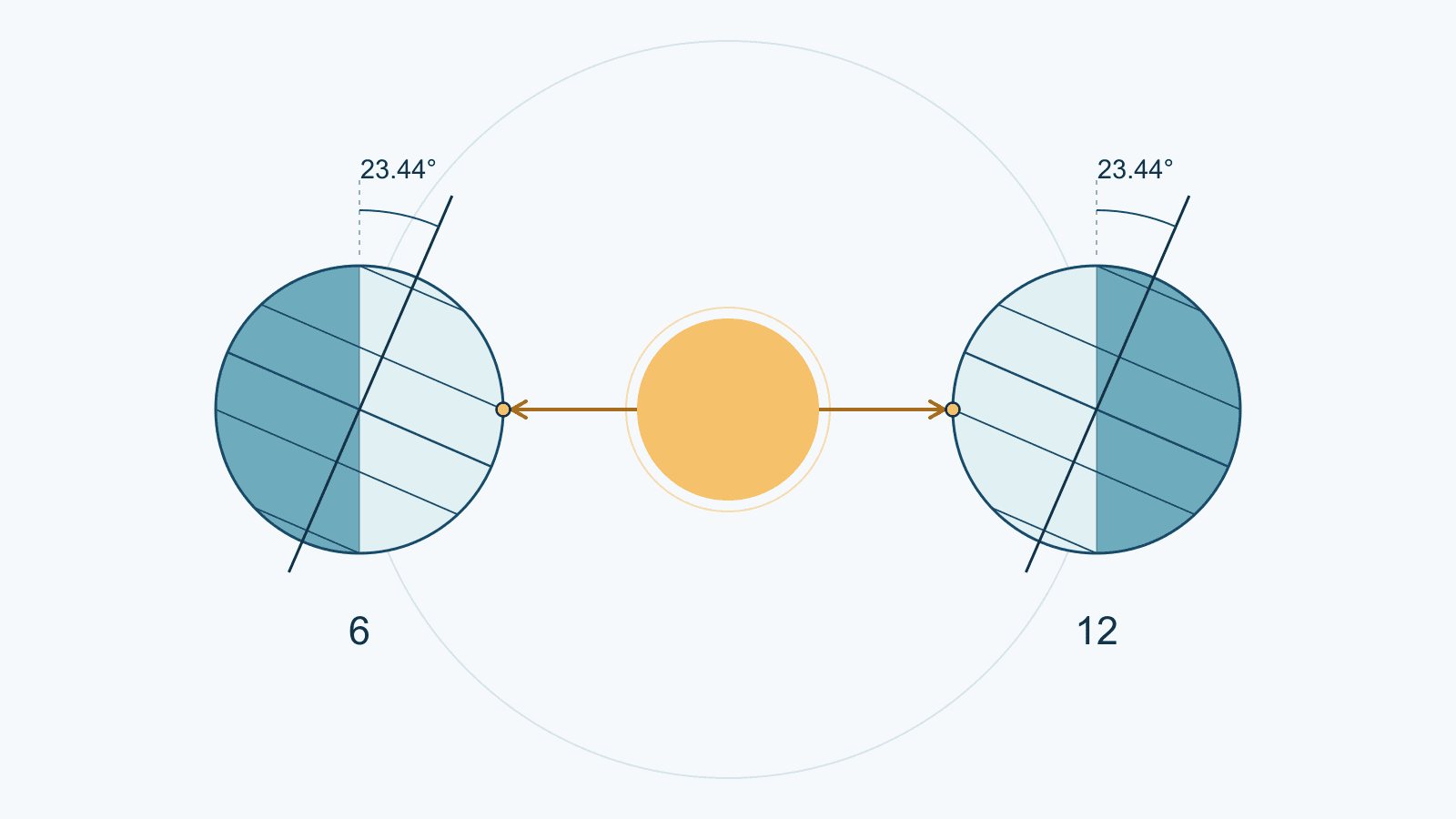
6 min read
The Solstice Explained: Longest Day, Shortest Day
The solstices bring the longest and shortest days of the year. Learn what 'the Sun stands still' means, when the next solstices happen and how much daylight you get.
4 min read
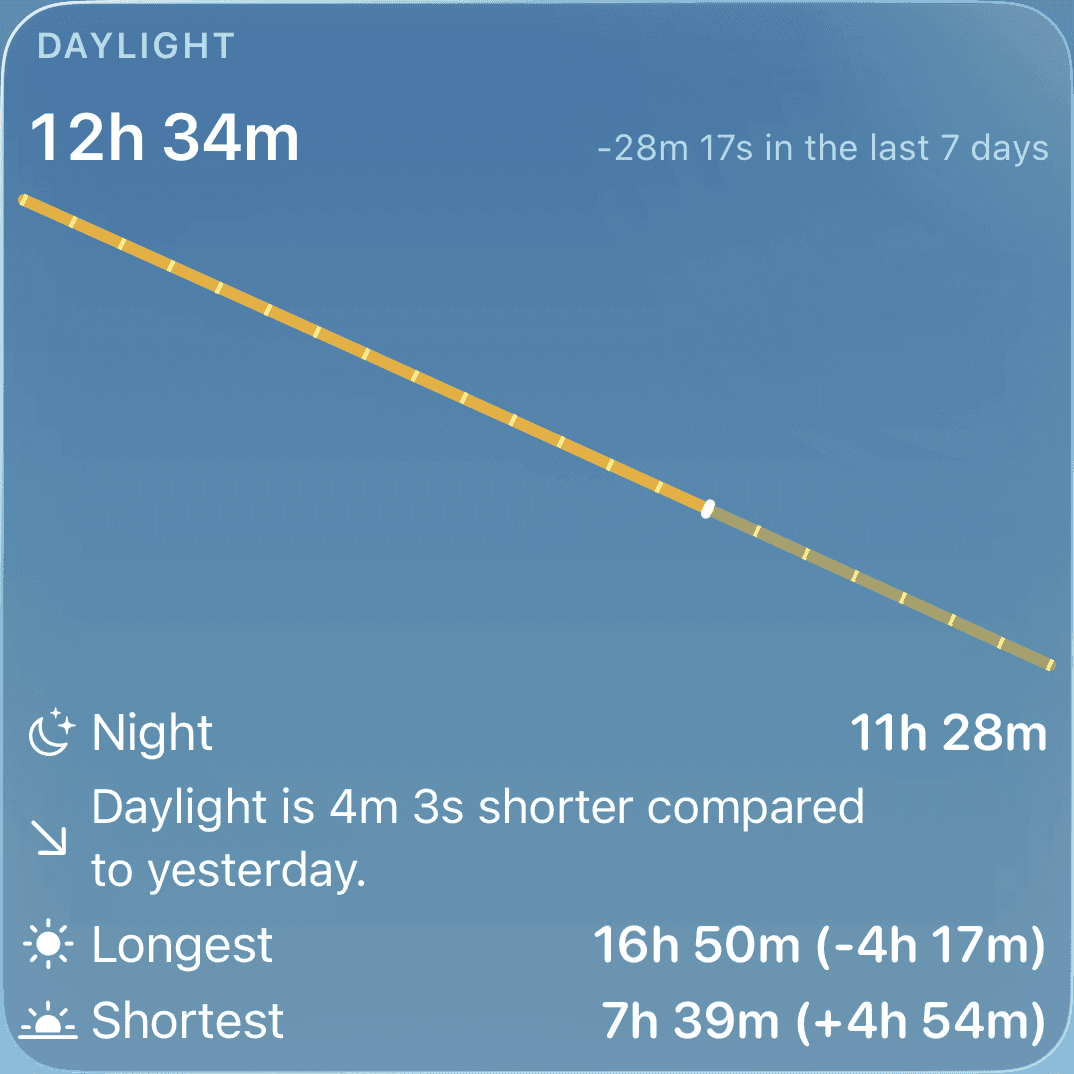
How to track how much daylight you gain or lose each day
See how many minutes of daylight you gain or lose each day, why the change is fastest at the equinoxes, and how latitude changes the numbers.
4 min read
Perihelion and Aphelion: When Earth Is Closest to the Sun
Earth is closest to the Sun in early January and farthest in early July. See the dates for the next few years and how much the distance changes sunlight.
5 min read
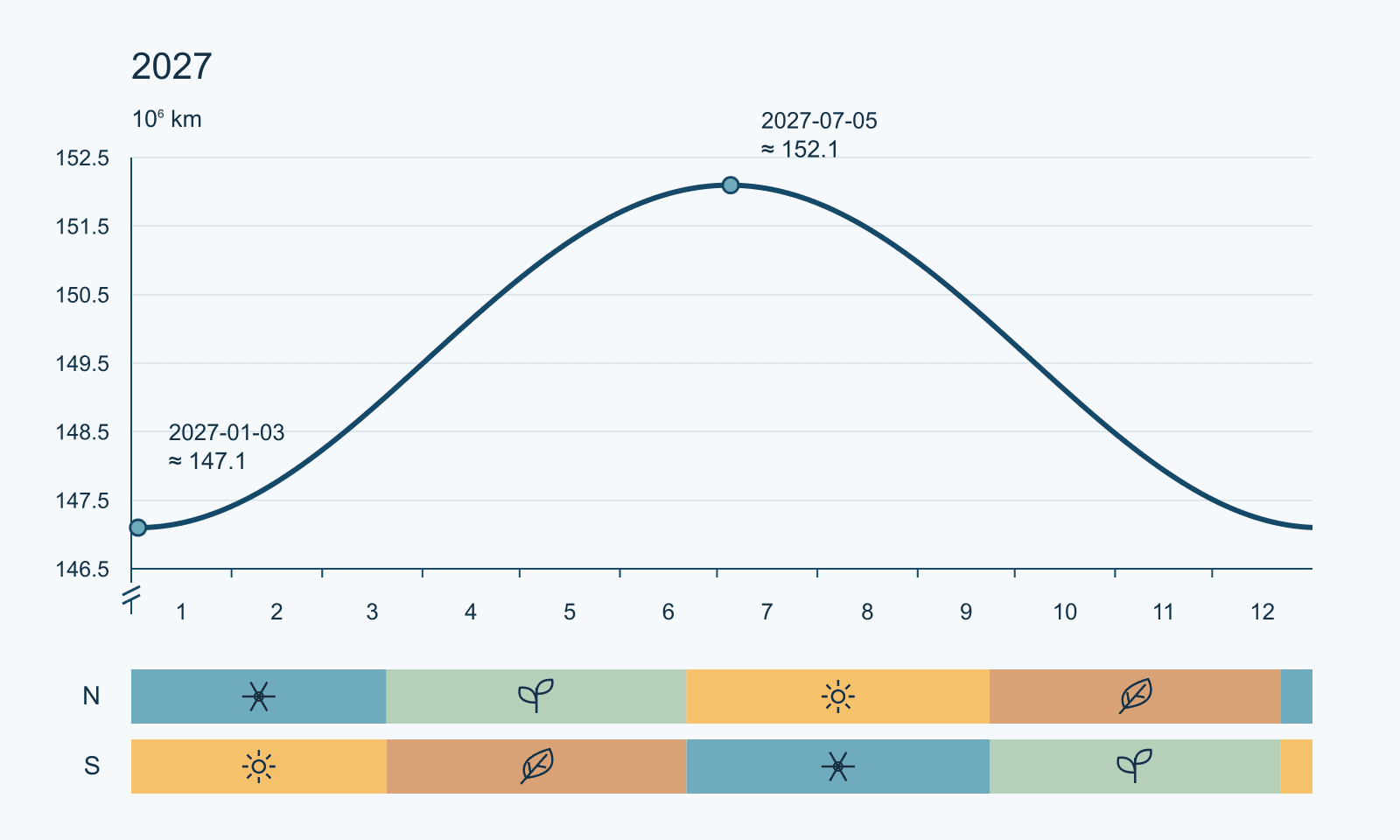
Why Earth Is Closest to the Sun in Northern Winter
Earth is nearest the Sun in early January, in the middle of the northern winter. Learn why distance does not cause the seasons and what the tilt of Earth's axis does instead.
5 min read
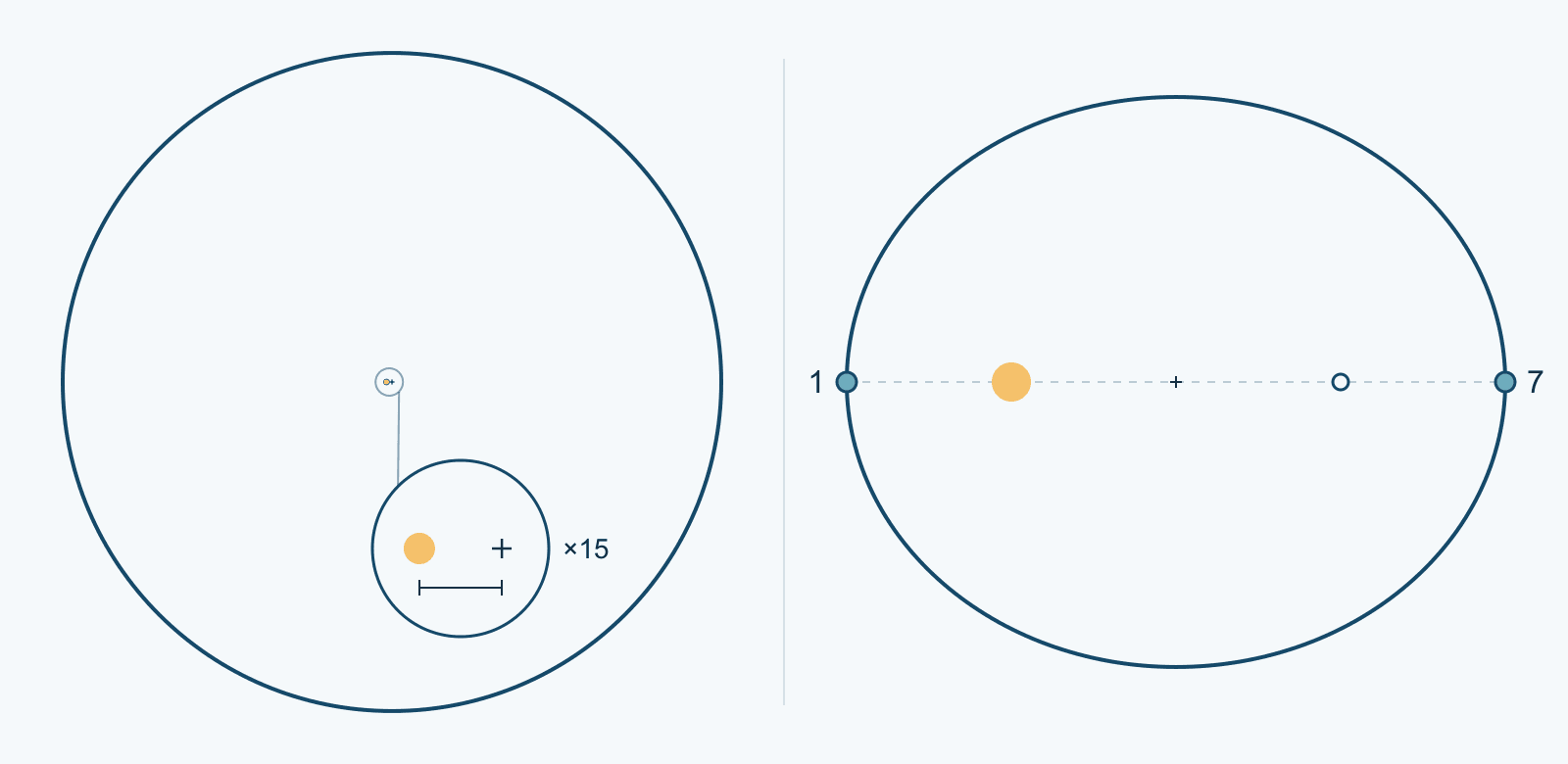
Earth's Elliptical Orbit: Why It Is Almost a Circle
Earth's orbit is an ellipse with an eccentricity of about 0.017. Learn what that number means, how Kepler's laws describe the orbit, and why it looks like a circle.
1 min read
Sunrise & Sunset
Sunrise & Sunset · SolarWatch
1 min read
Noon/Midnight
Noon/Midnight · SolarWatch
1 min read
Yearly Overview
Yearly Overview · SolarWatch