
 Engin Kurutepe
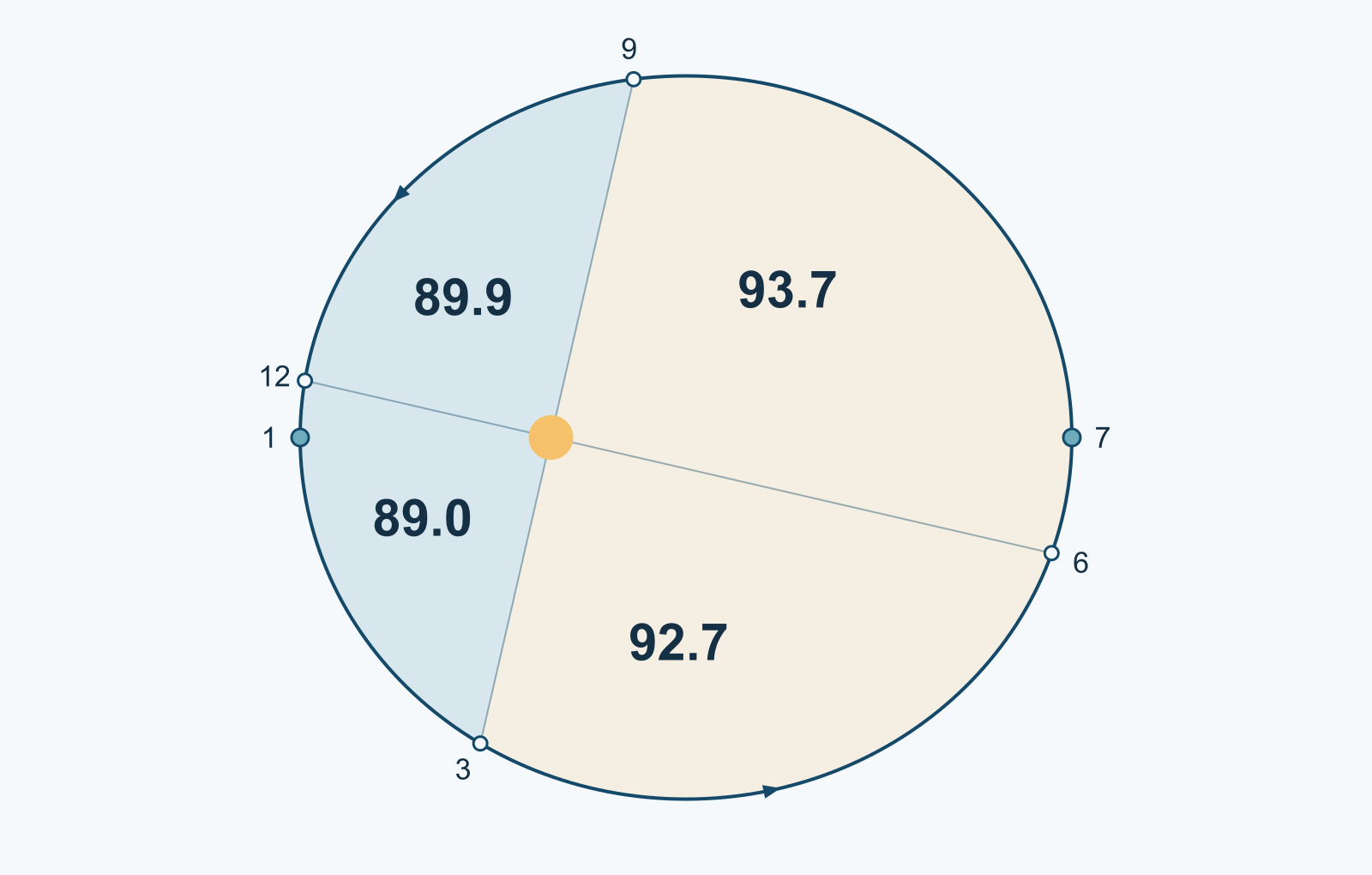
The four astronomical seasons run from an equinox to a solstice, or from a solstice to an equinox. You might expect each to last a quarter of a year, about 91.3 days. They do not. In the Northern Hemisphere, summer lasts about 93.7 days and winter about 89.0 days, so summer is longer by about four days and 16 hours.
The reason is the shape of Earth's orbit. Earth moves a little faster when it is close to the Sun and a little slower when it is far away, and the seasons that fall near the far end take longer to get through.
The four seasons by the numbers
Here are the lengths for the year from the March 2027 equinox to the March 2028 equinox, worked out from the US Naval Observatory's times. Season names are for the Northern Hemisphere.
| Season | Starts (UTC) | Ends (UTC) | Length |
|---|---|---|---|
| Spring | 20 March 2027, 20:25 | 21 June 2027, 14:11 | 92 days 18 hours (92.7 days) |
| Summer | 21 June 2027, 14:11 | 23 September 2027, 06:02 | 93 days 16 hours (93.7 days) |
| Autumn | 23 September 2027, 06:02 | 22 December 2027, 02:42 | 89 days 21 hours (89.9 days) |
| Winter | 22 December 2027, 02:42 | 20 March 2028, 02:17 | 88 days 23½ hours (89.0 days) |
The numbers barely change from one year to the next. They shift by minutes, not hours.
Add the first two rows and you get about 186.4 days from the March equinox to the September equinox. The other half of the year, from September back to March, takes about 178.8 days. That is a gap of more than a week.
Why Earth slows down in July
Each season covers the same stretch of Earth's orbit: a quarter turn, or 90 degrees, around the Sun. What changes is how fast Earth covers it.
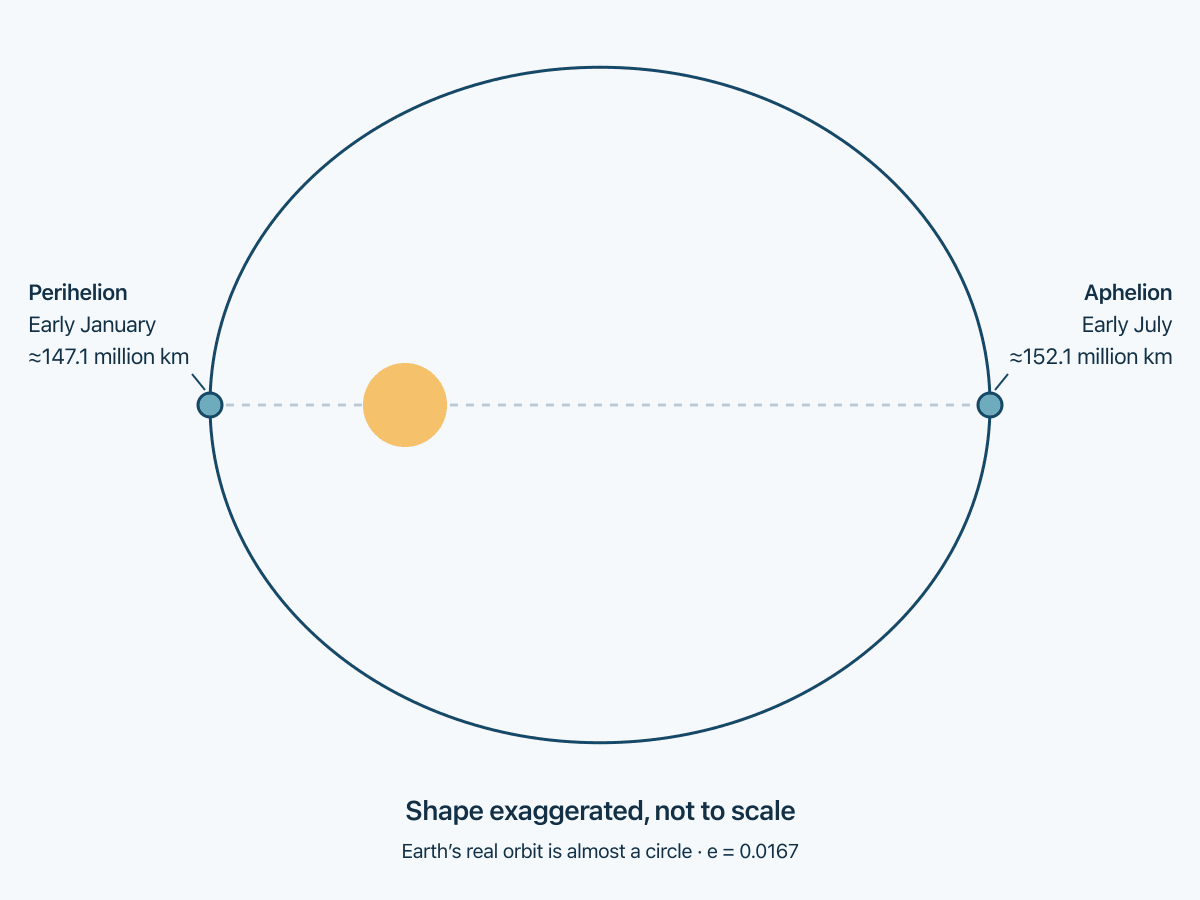
Earth's orbit is a slightly stretched circle, and the Sun is not quite at its center. Earth is closest to the Sun in early January, at perihelion, and farthest in early July, at aphelion. Kepler's second law says a planet moves faster when it is closer to the Sun. Earth's speed ranges from about 30.3 kilometers per second in January to about 29.3 kilometers per second in July. Our guide to Earth's elliptical orbit explains why.
From the ground, you can see this as the Sun's daily drift against the background stars. In early January the Sun moves about 1.02 degrees along its yearly path each day. In early July it moves about 0.95 degrees. At the January rate, a quarter turn would take about 88 days. At the July rate, it would take about 94 days. The actual seasons fall in between, because each one mixes faster and slower stretches.
Why summer is the longest
Aphelion falls about two weeks after the June solstice. That puts the slowest part of the orbit early in northern summer. The slow stretch reaches back into late spring and forward through the rest of summer, so both seasons are long. Summer, which holds aphelion itself, is the longer of the two.
Perihelion falls about two weeks after the December solstice, in early northern winter. Winter gets the fastest part of the orbit and is the shortest season. Autumn, which ends about two weeks before perihelion, is only about 21 hours longer than winter.
The view from the Southern Hemisphere
South of the equator the names swap, but the dates stay the same. Southern summer runs from the December solstice to the March equinox, so it is the shortest season of the year there, at about 89.0 days. Southern winter is the longest, at about 93.7 days.
The Southern Hemisphere has its summer when Earth is closest to the Sun, so its summer sunlight is about 7% stronger than the north's. It also gets that summer for fewer days. Over each half of the year the two effects cancel out, and both hemispheres receive the same total amount of sunlight. Our guide on why Earth is closest to the Sun in northern winter goes into this in more detail.
An old discovery
Astronomers noticed the unequal seasons more than 2,000 years ago. In the second century BC, the Greek astronomer Hipparchus timed the equinoxes and solstices and found that spring lasted about 94½ days and summer about 92½ days, according to Ptolemy's later account. He explained the gap by placing Earth a little away from the center of the Sun's circular path.
That model worked well for centuries. In 1609, Kepler showed that the cause is an elliptical orbit with the Sun at one focus and a speed that changes along the way.
Hipparchus found spring longer than summer, the opposite of today. In his time, that was true. The seasons themselves have shifted since then.
The lengths slowly change
The point of perihelion is not fixed in the calendar. The direction of Earth's axis slowly wobbles, and the orbit itself slowly turns. Together they move perihelion about one day later every 58 years. It takes about 21,000 years to go all the way round the calendar.
As perihelion moves, the slow and fast stretches of the orbit slide into different seasons:
- In Hipparchus's time, aphelion fell in late northern spring, so spring was the longest season.
- Around the year 1250, perihelion lined up with the December solstice. Spring and summer were then the same length, and so were autumn and winter.
- Today, aphelion falls early in summer, so summer is the longest.
- Over the next few thousand years, the slow stretch will move into northern autumn, and autumn will grow longer while spring gets shorter.
The total for the year stays the same. Only the split between the seasons changes.
Mars has far more unequal seasons
Mars has a more stretched orbit than Earth, with an eccentricity of about 0.093 compared with Earth's 0.017. Its seasons differ by a lot more. The lengths below are in sols, or Martian days, which are about 40 minutes longer than ours.
| Season on Mars (northern) | Length |
|---|---|
| Spring | about 194 sols |
| Summer | about 178 sols |
| Autumn | about 142 sols |
| Winter | about 154 sols |
On Mars, northern spring lasts more than seven weeks longer than northern autumn. On Earth, the longest and shortest seasons differ by less than five days.

NASA, P. James, T. Clancy, S. Lee · Hubble WFPC2 · 1996–1997
Sources and related guides
- The US Naval Observatory lists dates and times of the equinoxes, solstices, perihelion and aphelion. The season lengths in this article are calculated from its times.
- NASA's Earth fact sheet gives Earth's orbital speeds and eccentricity.
- NASA explains Kepler's laws of planetary motion.
- The Planetary Society has a page on the Martian calendar and the length of Mars's seasons.
- Related SolarWatch guides: perihelion and aphelion, the solstices and why the earliest sunset comes before the shortest day.
See it in SolarWatch
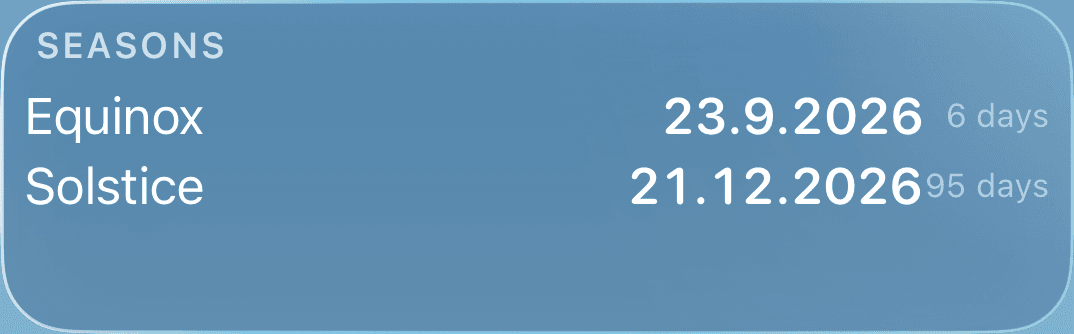
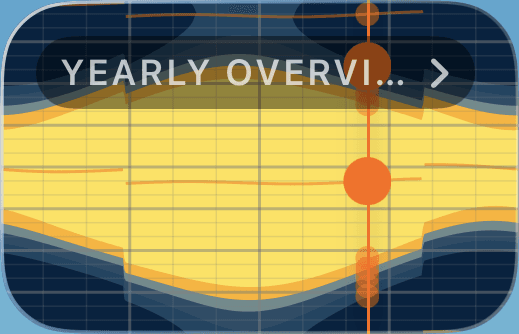
The Seasons tile shows the dates and times of the next equinoxes and solstices. Count the days between them and you can check the numbers in this article yourself. The Yearly Overview shows how sunrise, sunset and day length change through the year where you are.
Keep reading
All guides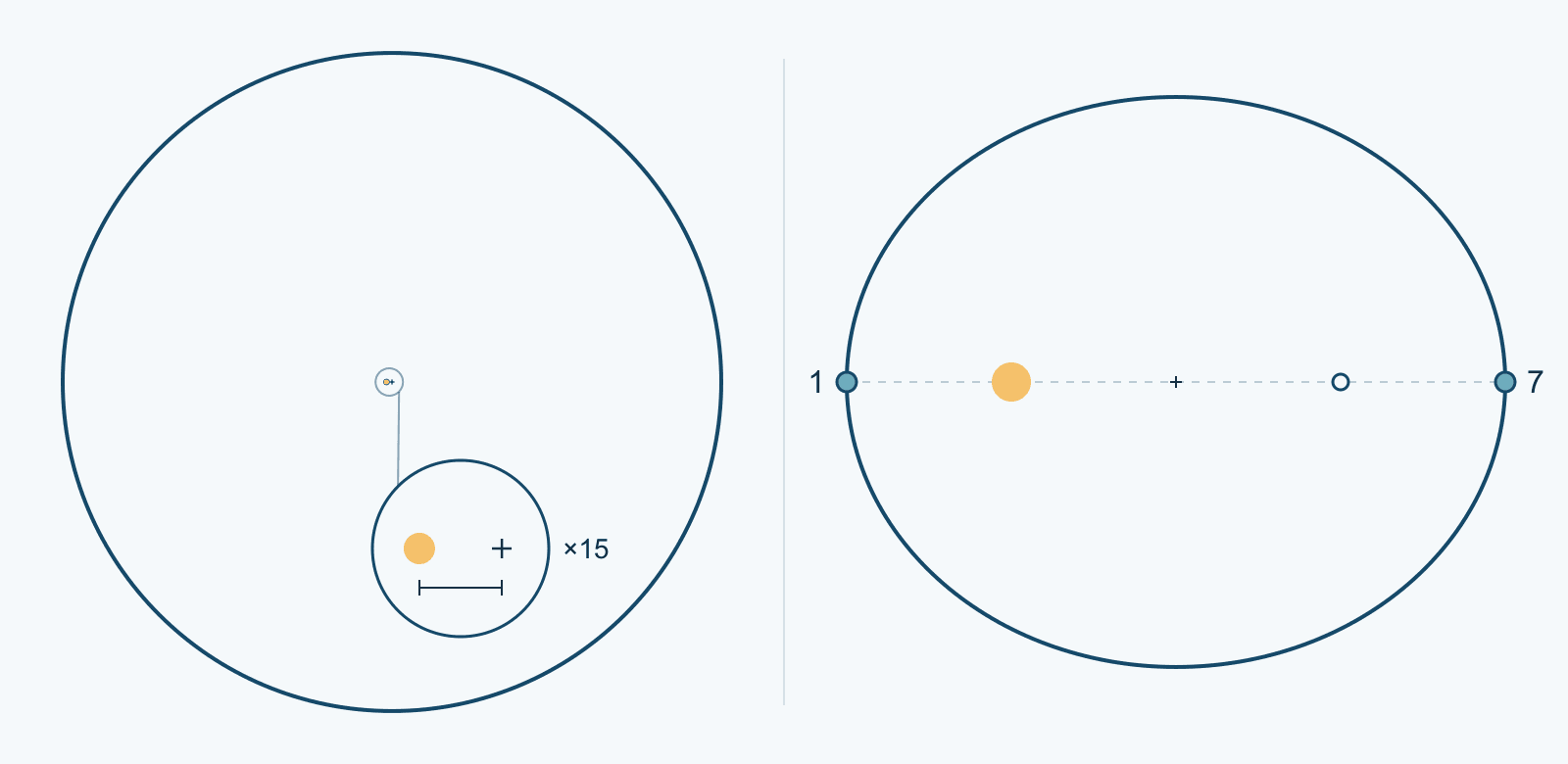
5 min read
Earth's Elliptical Orbit: Why It Is Almost a Circle
Earth's orbit is an ellipse with an eccentricity of about 0.017. Learn what that number means, how Kepler's laws describe the orbit, and why it looks like a circle.
5 min read
Perihelion and Aphelion: When Earth Is Closest to the Sun
Earth is closest to the Sun in early January and farthest in early July. See the dates for the next few years and how much the distance changes sunlight.
5 min read
Why Earth Is Closest to the Sun in Northern Winter
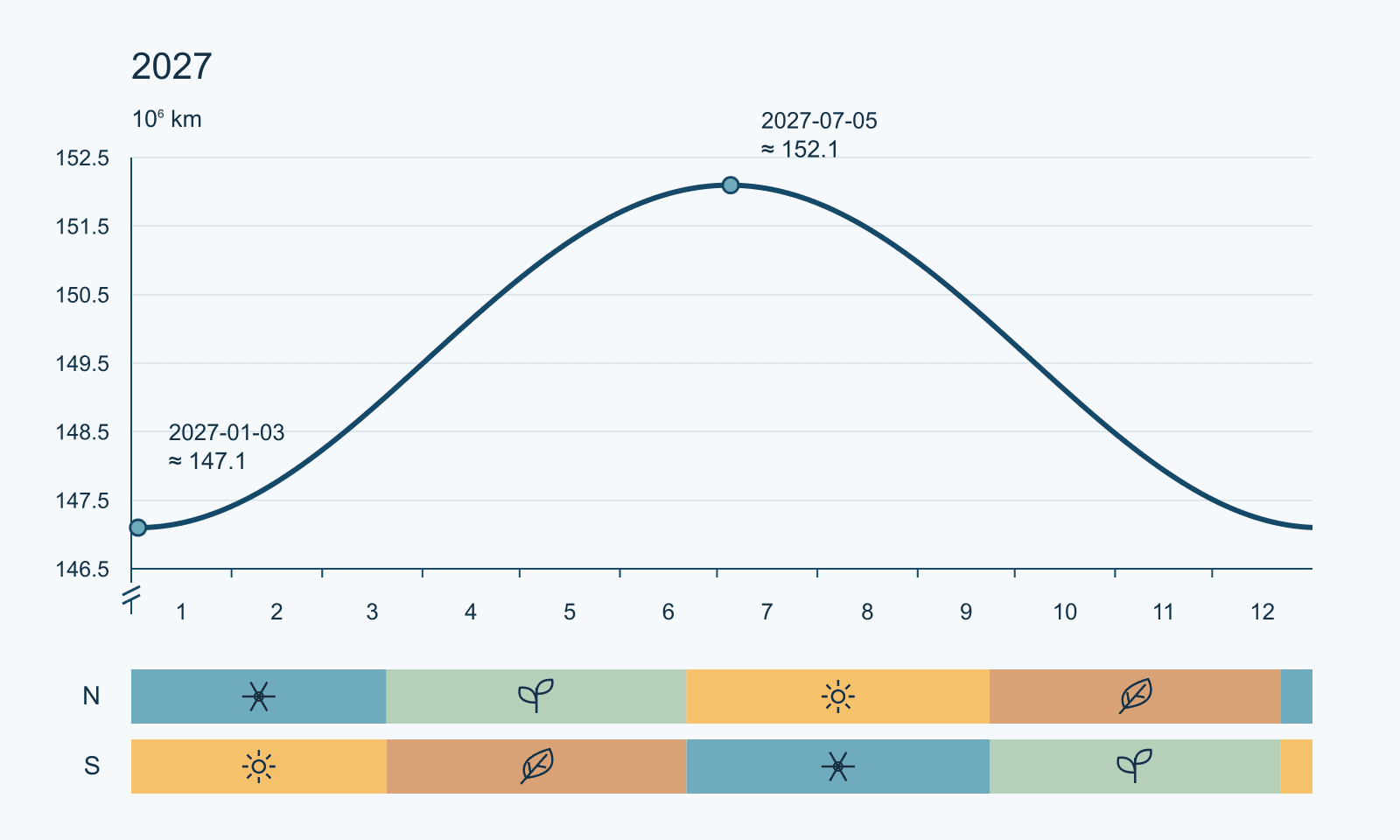
Earth is nearest the Sun in early January, in the middle of the northern winter. Learn why distance does not cause the seasons and what the tilt of Earth's axis does instead.
6 min read
The Solstice Explained: Longest Day, Shortest Day
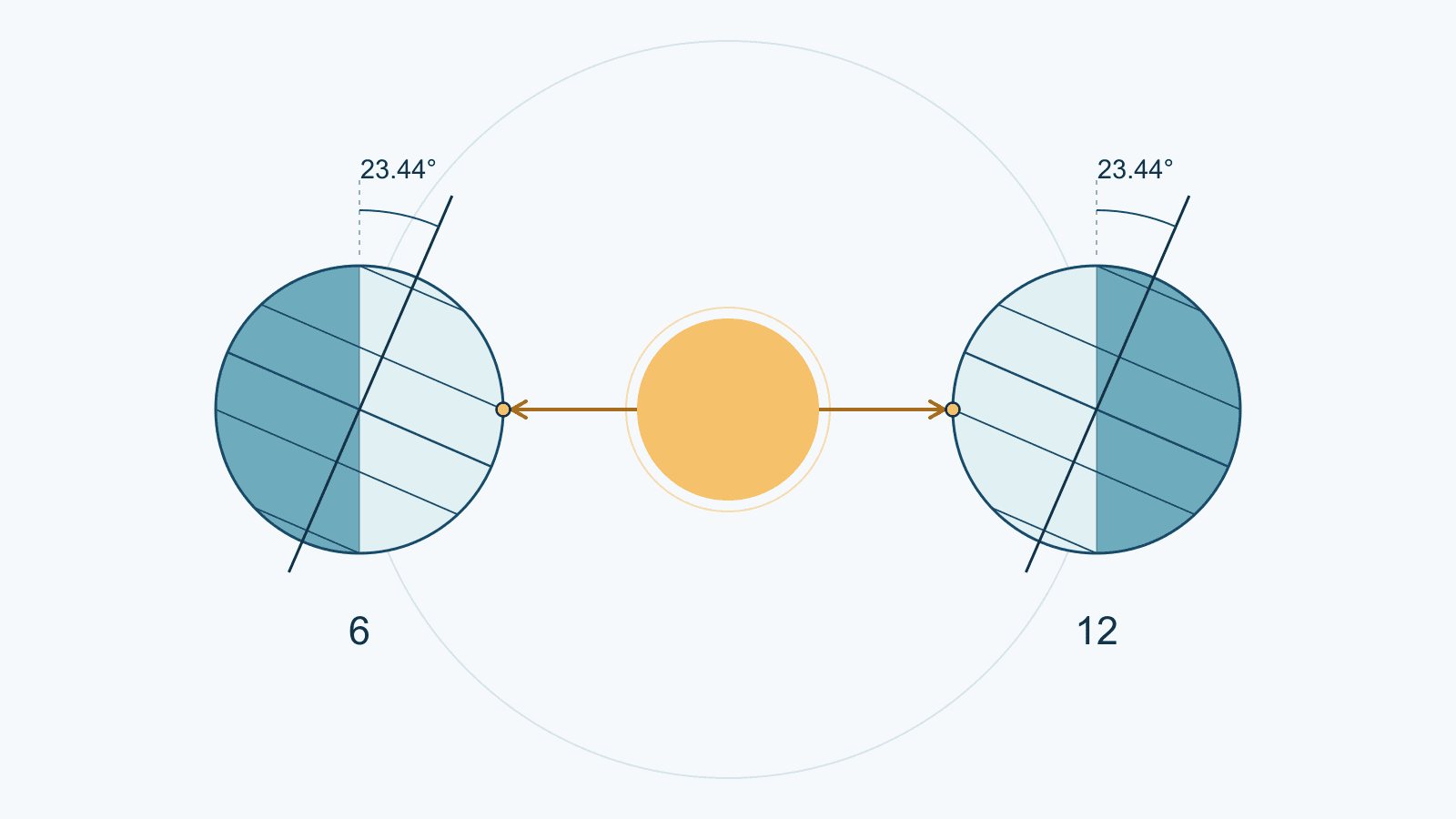
The solstices bring the longest and shortest days of the year. Learn what 'the Sun stands still' means, when the next solstices happen and how much daylight you get.
6 min read
Why the Earliest Sunset Comes Before the Shortest Day
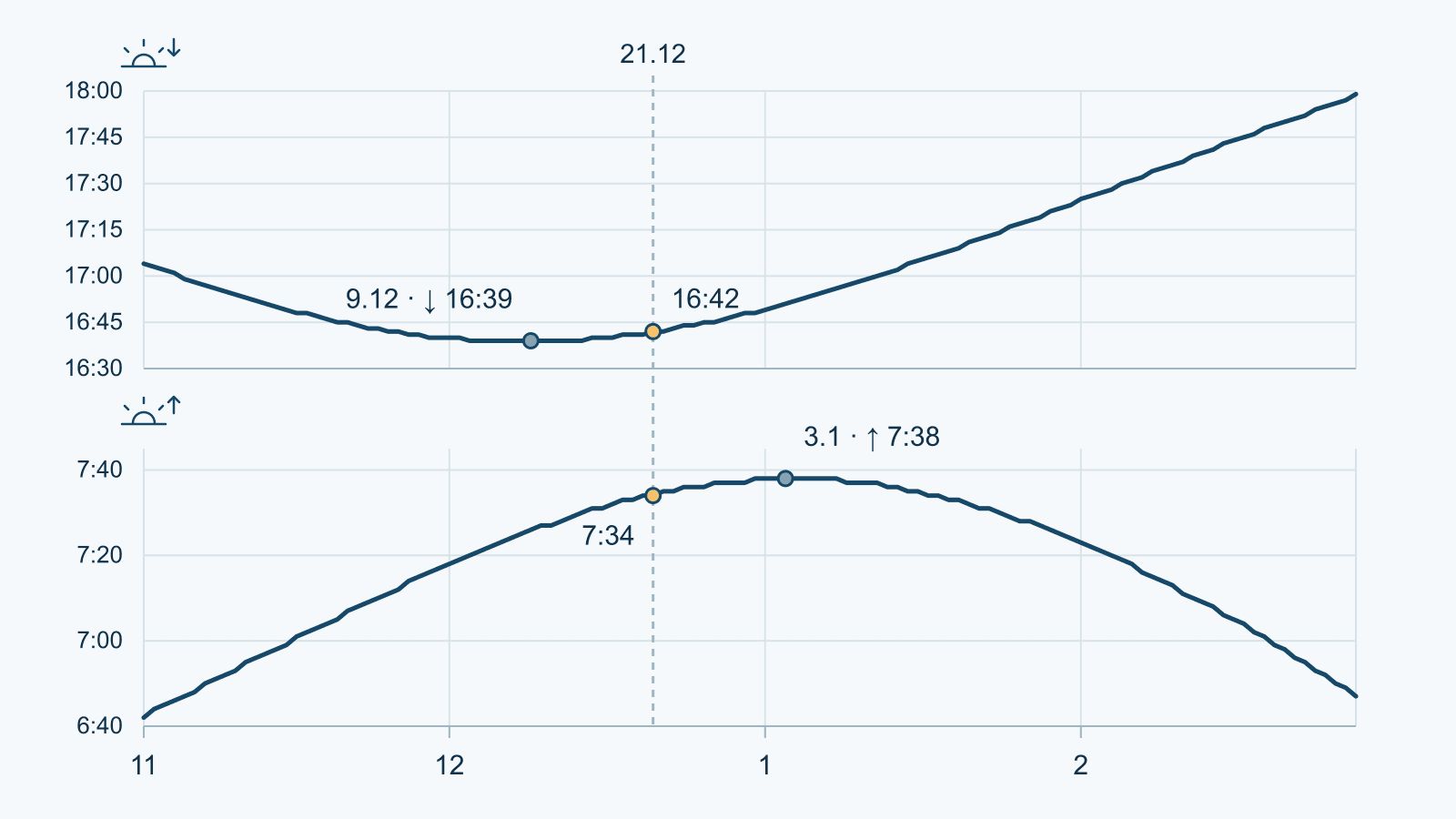
The earliest sunset of the year comes before the December solstice, and the latest sunrise comes after it. Learn why solar noon drifts and see the dates for your latitude.
1 min read
Seasons
Seasons · SolarWatch
1 min read
Yearly Overview
Yearly Overview · SolarWatch